Cradled between the majestic cliffs of Mount Lushan (庐山) and the vast meeting waters of the Yangtze River and Poyang Lake (鄱阳湖), Jiujiang (九江) in northern Jiangxi Province represents a poetic intersection of classical Chinese literati landscape and enduring riverside craft.
For centuries, Jiujiang was known as one of imperial China’s “Four Great Tea Markets” and “Four Great Rice Capitals.” Chinese poets from Bai Juyi to Su Dongpo composed seminal stanzas along its shores. Today, Jiujiang offers remote workers and culturally curious travelers an escape from coastal metropolises: unhurried riverfront boulevards, crisp mountain air, ancient tea plantations, and extraordinary living folk arts in nearby Hukou County (湖口县).
Whether you are looking to base yourself for a month of deep writing beneath Mount Lushan or seeking an authentic encounter with Chinese Intangible Cultural Heritage, this guide covers everything you need to know.
Quick Facts for Slow Travelers
- Location: Northern Jiangxi Province, bordering Hubei and Anhui along the Yangtze River
- Estimated Monthly Budget: $850 – $1,200 USD (¥6,000 – ¥8,600 RMB)
- Geographic Highlights: Mount Lushan World Heritage Site, Poyang Lake convergence at Shizhong Mountain (石钟山)
- Folk Heritage: Hukou Intangible Cultural Heritage Paper-Cutting (Hukou Jianzhi), traditional Shuangling rice wine brewing (Shuangling Fenggangjiu)
- High-Speed Rail Connections: Direct bullet trains to Nanchang (45 mins), Wuhan (1 hr 15 mins), Shanghai (3.5 hours), and Shenzhen (4.5 hours)
- Climate: Humid subtropical; distinct four seasons, cool alpine microclimate on Lushan, colorful foliage in autumn
The Cultural Heart of Hukou: Paper-Cutting & Rice Wine
Located roughly 30 kilometers east of central Jiujiang, Hukou County sits at the geographic confluence where the emerald waters of Poyang Lake pour into the mighty ochre stream of the Yangtze River. Beyond its famed limestone bluff, Stone Bell Mountain (石钟山), Hukou preserves centuries of folk craft designated under China’s National Intangible Cultural Heritage registers.
1. Hukou Paper-Cutting (湖口剪纸)
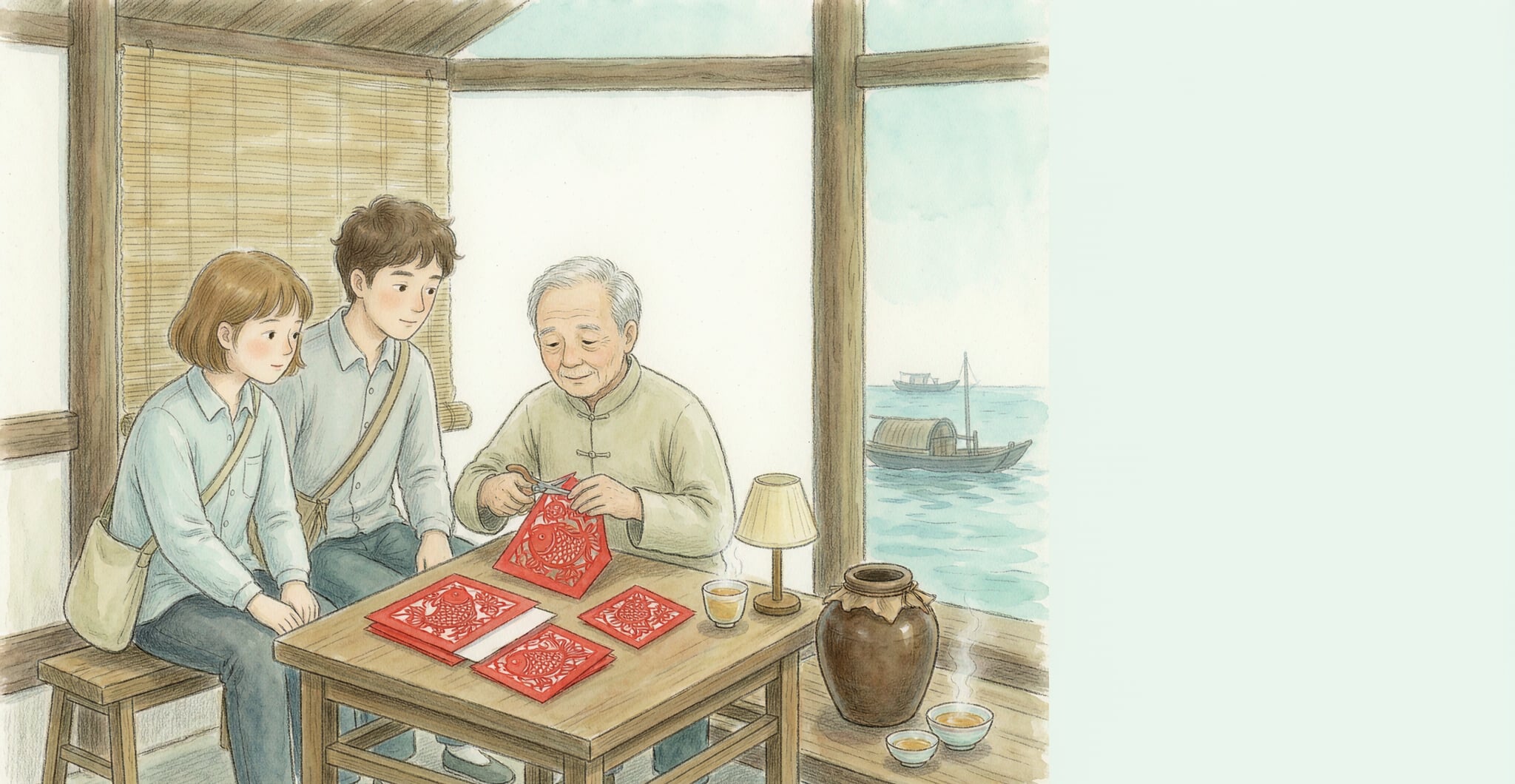
Recognized on the National List of Intangible Cultural Heritage of China, Hukou paper-cutting traces its roots across centuries of rural celebration and domestic storytelling. Unlike the bold, geometric cuts typical of northern Chinese folk paper art, Hukou paper-cutting is renowned for its Southern lyrical finesse:
- Artisanal Technique: Masters use ultra-fine scissors and carving chisels on rice paper, creating hair-thin lines depicting Yangtze river fauna, freshwater fishermen, Poyang lotus blossoms, and mythological water guardians.
- Narrative Imagery: Pieces frequently portray the historic “Song of the Fisherman” (Yuge), celebrating seasonal fish migrations and lakeside harvest rituals.
[!NOTE] Workshop & Exhibition Availability Jiujiang and Hukou cultural heritage exhibitions, master demonstrations, and folk workshops are community-run and seasonal. They occur predominantly around traditional festivals (Spring Festival, Dragon Boat Festival, Mid-Autumn) or via scheduled visits to county cultural centers (Wenhuaguan). They do not run daily commercial tourist sessions. Inquire locally or through your guesthouse host for current artisan schedules.
2. Traditional Shuangling Rice Wine Brewing (双菱封缸酒 / 湖口米酒)
Hukou is equally celebrated for its indigenous brewing traditions, notably Shuangling Fenggang Wine (双菱封缸酒) and rustic farmhouse rice wines (mijiu).
Brewed from local Poyang Lake glutinous rice, crystalline spring water from Mount Lushan’s aquifers, and traditional herbal yeast cakes (jiuqu), the wine undergoes a prolonged natural fermentation before being sealed inside terracotta urns (fenggang). The resulting elixir is amber-hued, pleasantly viscous, and deeply aromatic, balancing honeyed natural sweetness with earthy fermented complexity. In cold winter months, locals warm the wine with ginger slices and dried goji berries over glowing charcoal stoves.
Mountain Retreat: Living Below Mount Lushan
Mount Lushan towers directly south of Jiujiang, rising to 1,474 meters above the Yangtze plains. Immortalized in classical Chinese literature, Lushan is famous for its perennial sea of clouds and historic summer villas built by international diplomats and scholars in the late 19th and early 20th centuries at Guling Town (牯岭镇).
Slow Travel Itinerary around Jiujiang & Lushan
- Lushan Cloud-Mist Tea Plantations (庐山云雾茶): Visit the terraced tea gardens perched at 800 meters elevation. Grown under mist-diffused sunlight, this imperial green tea is celebrated for its jade color, orchid fragrance, and high amino acid content.
- Bailudong Academy (White Deer Grotto Academy / 白鹿洞书院): Tucked into a tranquil forested ravine at the mountain’s foot, this is one of imperial China’s most revered neo-Confucian learning sanctuaries, founded in the Tang Dynasty and revitalized by Zhu Xi in the Song Dynasty. It is an inspiring destination for writers, researchers, and lovers of classical architecture.
- Poyang Lake Wetland Bird Sanctuary: From November through March, Poyang Lake becomes the premier wintering haven for over 95% of the world’s endangered Siberian cranes and hundreds of thousands of migratory waterfowl.
Cost of Living Breakdown for Jiujiang
Jiujiang offers one of the most accessible cost structures in eastern/central China, allowing slow travelers and remote workers to live exceptionally well on modest budgets (compare all regions in our China Cost of Living Breakdown):
| Expense Category | Monthly Cost (CNY) | Monthly Cost (USD) | Practical Notes |
|---|---|---|---|
| Furnished 1-Bedroom Apartment | ¥1,800 – ¥2,800 | $250 – $390 | Modern high-rise along the Yangtze or Xunyang (see Long-Term Housing) |
| Mountain Guesthouse (Guling / Lushan) | ¥3,000 – ¥4,500 | $415 – $625 | Weekly/monthly rates in alpine retreat village |
| Local Dining & Farmhouse Eateries | ¥1,200 – ¥1,800 | $165 – $250 | Jiangxi Poyang freshwater fish, bamboo shoots, clay-pot stews |
| Tea & Cafe Budget | ¥350 – ¥600 | $50 – $85 | Local tea houses with infinite thermos water refills & third-wave cafes |
| Regional Transit & High-Speed Rail | ¥180 – ¥350 | $25 – $50 | City buses, taxis via Alipay/WeChat, and county shuttles |
| Total Estimated Budget | ¥4,200 – ¥7,200 | $585 – $1,000 | Exceptional value for cultural immersion |
When settling into a private apartment or mountain cottage in Guling, verify that your host assists with your mandatory 24-hour accommodation registration (PSB). Jiujiang is also situated right next to Jiangxi’s world-famous porcelain capital—explore our companion Jingdezhen Creative Nomad Guide.
Food & Local Jiangxi Specialties
Jiangxi cuisine is famous for its bold use of fresh chili, aromatic herbs, and savory slow braises:
- Poyang Lake Braised Mandarin Fish (鄱阳湖鳜鱼): Tender whole freshwater fish simmered with fermented chili paste, scallions, and mountain spring water.
- Jiujiang Tea饼 (九江茶饼): Historic crumbly shortcakes flavored with cold-pressed camellia tea oil, sesame seeds, and sweet osmanthus blossoms.
- Lushan Stone Chicken & Stone Fish (石鸡、石鱼): Traditional mountain delicacies prepared with clear broths and medicinal wild herbs.
- Jiangxi Fried Rice Noodles (江西炒米粉): Springy artisanal rice noodles stir-fried over roaring woks with pork slivers, pickled greens, and garlic chili.
Remote Work & Connectivity Practicalities
Digital Infrastructure
- High-Speed Fiber & 5G: Jiujiang’s urban center (Xunyang and Lianxi districts) features comprehensive 5G coverage (China Telecom and China Mobile), delivering typical download speeds between 150 and 350 Mbps. Ensure your laptops have stealth connections configured (see VPN & Internet Survival Guide).
- Working Cafes: Xunyang District along Nanhu Lake (南湖) and the Yangtze Riverfront Promenade hosts relaxed work-friendly cafes with reliable Wi-Fi, air conditioning, and scenic water views.
Transportation & Access
- Jiujiang Railway Station & Jiujiang Lushan Station: Seamless high-speed rail connections on China Railway 12306 link Jiujiang to provincial capital Nanchang in 45 minutes, Wuhan in 75 minutes, Jingdezhen in 45 minutes, Hangzhou in 2.5 hours, and Shanghai Hongqiao in roughly 3.5 hours.
- Reaching Hukou: Regular county intercity shuttles depart every 20 minutes from Jiujiang East Bus Station to Hukou (30–40 minutes, ~¥15 CNY). Taxis or ride-hailing services (Didi inside Alipay) cost approximately ¥60–¥85 CNY one way.
- Pre-Trip Readiness: Verify your arrival steps on our Interactive 10-Step China Arrival Checklist or consult our team for Custom Cultural Travel Advisory.
Frequently Asked Questions
When is the best time of year to visit Jiujiang and Hukou?
Autumn (September to November) offers pleasant temperatures, clear mountain views on Mount Lushan, golden tea harvest foliage, and the arrival of migratory birds at Poyang Lake. Spring (April to June) is ideal for fresh tea picking and lush green landscapes, though rainfall is more frequent.
Can international travelers rent an apartment or book stays in Jiujiang?
Yes. Mid-range and upscale hotels in downtown Jiujiang (Xunyang and Lianxi districts) regularly accommodate international guests via automated passport registration systems. On Mount Lushan (Guling Town), numerous boutique guesthouses warmly welcome international visitors. Always verify foreigner check-in eligibility on booking platforms prior to arrival.
Is Mount Lushan easy to visit as a day trip from central Jiujiang?
Yes. Direct tourist cable cars and shuttle buses connect the foot of the mountain to Guling Town in under 30 minutes, making day trips convenient. However, staying several nights atop the mountain in a historic cottage is highly recommended for focused creative work and morning mountain hikes.
Curator of China Nomad Guide. Specializing in bespoke route architecture, bilingual on-the-ground fixer services, and neutral medical/dental tourism logistics. Based between Chengdu, Yunnan, and Shanghai.
Get the China Stay China Arrival Kit & Checklist
Don’t get locked out without connectivity or payment at the border. Instant access to our interactive 12-step field guide + offline 1-page PDF printable cheat sheet covering pre-flight eSIMs, foreign card Alipay binding, PSB police registration, and railway ticketing.
Curated by Villanelle (IG: @v.forvillanelle • hello@chinastay.org). Zero spam.