Whenever fellow travelers ask me where to spend a long weekend after Shanghai, they almost always expect me to say Hangzhou or Suzhou. I tell them to buy a sixty-five yuan high-speed rail ticket and get off forty miles earlier in Shaoxing.
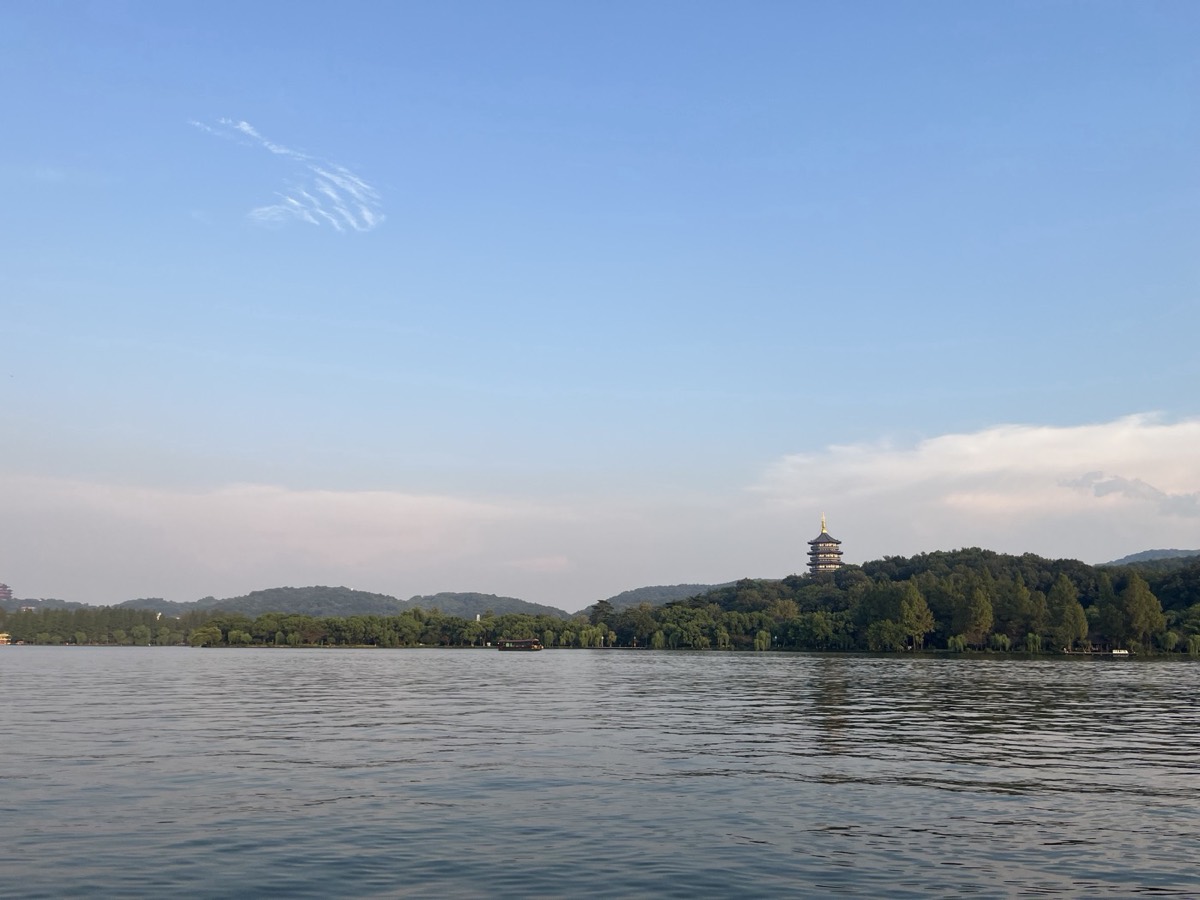
Hangzhou is magnificent, but in peak season its West Lake can feel like Florence in July—drowning in selfie sticks, tour megaphones, and manicured lakeside malls. Shaoxing is something else entirely. It is the quieter, salt-of-the-earth cousin that eastern Chinese locals revere as the true soul of Jiangnan. It is a city that still smells of what made it famous: sweet, nutty yellow wine fermenting in thousands of glazed earthenware urns, dark aromatic soy sauce aging under the morning sun, and brackish canal water gently lapping against thousand-year-old stone embankments.
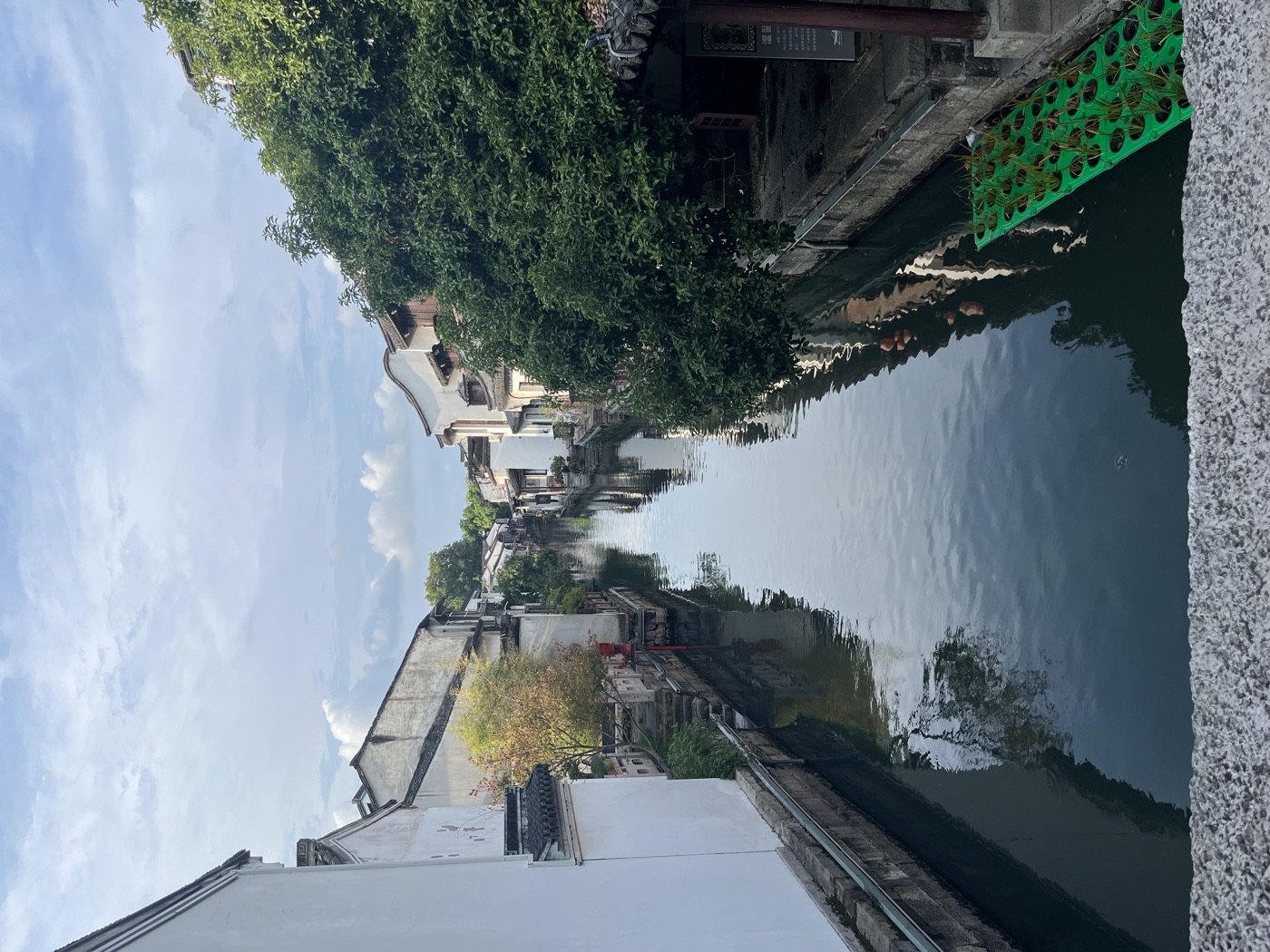
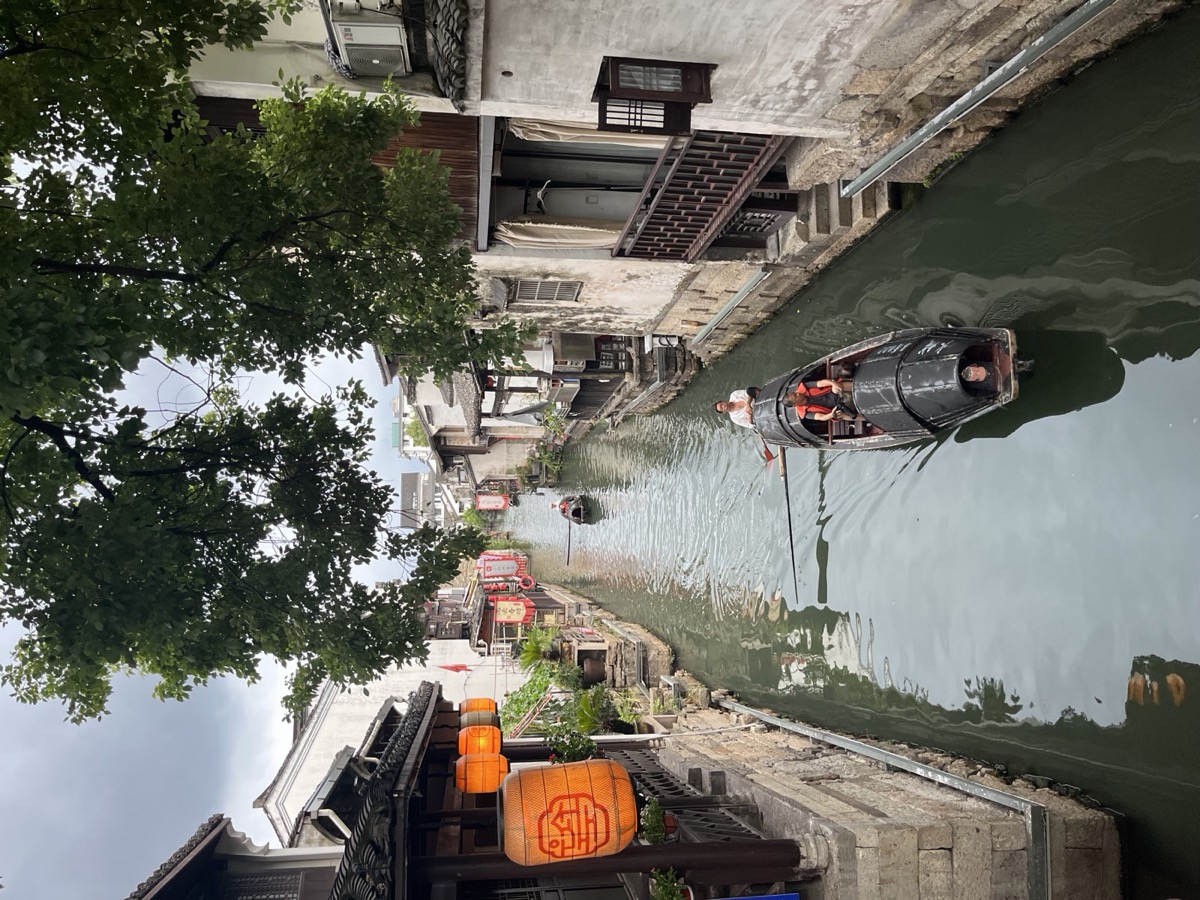
Looking out from an ancient stone bridge along the sleepy residential canals of Shaoxing’s historic core.
Founded in 490 BC by King Goujian of Yue—the legendary monarch who slept on brushwood and tasted bitter gall every morning for two decades to keep his resolve sharp after military defeat—Shaoxing has quietly lived through two and a half millennia without moving its urban foundations. Within its nine-square-kilometer old core alone, there are over one hundred and sixty protected heritage landmarks. It is, quite literally, a living open-air museum where everyday laundry still hangs to dry over Ming-dynasty stone lintels and grandmothers wash bok choy on stone water steps while black-awning boats drift by.
Whether you are looking for an inspiring writing sabbatical or a weekend of deep cultural immersion just over an hour from Shanghai, here is my intimate guide to experiencing the real Shaoxing.
1. The Waterways: Wupeng Boats & Ancient Stone Overpasses
In Venice, the gondola has become an expensive tourist theater. In Shaoxing, the black-awning boat (wupeng chuan) remains a deeply utilitarian marvel of folk physics.
The boatmen sit reclined in the stern, holding a steering oar with one arm while their bare or slippered feet work a large stern sweep back and forth in an effortless, hypnotic rhythm. Under arched stone canopies woven from blackened bamboo slats, you glide along canals that predate the Grand Canal, looking up into private domestic courtyards through open wooden latticework.
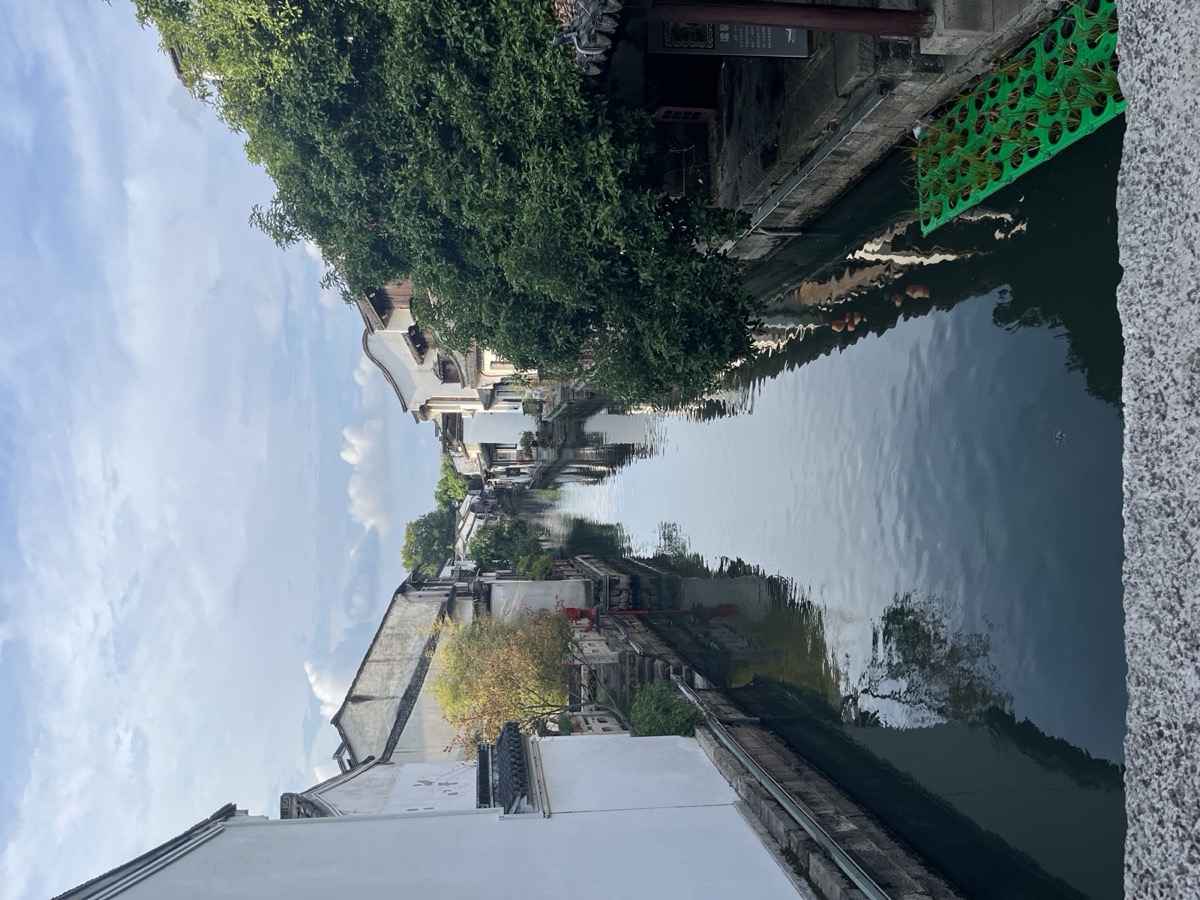
The view from Bazi Bridge (Southern Song Dynasty): three waterways and four residential streets intersecting in an unbroken 800-year-old stone overpass.
Bazi Bridge: The World’s First Medieval Flyover
If you visit only one historic site in Shaoxing, make it Bazi Bridge (八字桥). Built during the Southern Song Dynasty in the thirteenth century, locals affectionately call it China’s most ancient highway overpass. Because three distinct canals converge at this single intersection, Song engineers created a stone bridge shaped like the Chinese character Ba (八), allowing boat traffic, pedestrians, and handcarts from four different residential banks to cross simultaneously without congestion.
There are no turnstiles here, no souvenir hawkers, and no admission tickets. Find a rickety wooden bench outside a canal-side teahouse, order a pot of local green tea with endless kettle refills, and listen to the gentle clacking of river stones beneath the passing boats.
Cangqiao Straight Street: The Northern Alley Secret
Cangqiao Straight Street (仓桥直街) is Shaoxing’s primary canal-side promenade, famous for its rows of red lanterns reflected in the evening river water. But if you walk in from the main southern tourist portal, you risk getting bogged down by generic bubble tea stalls and mass-produced knickknacks.
My favorite hack is to take a taxi to Houguan Lane (后观巷) on the northern end and walk southward. You will bypass the tourist bottleneck and immediately enter the quiet residential section, where barrel coopers, hand-pulled noodle artisans, and elderly chess players still dominate the street corners.
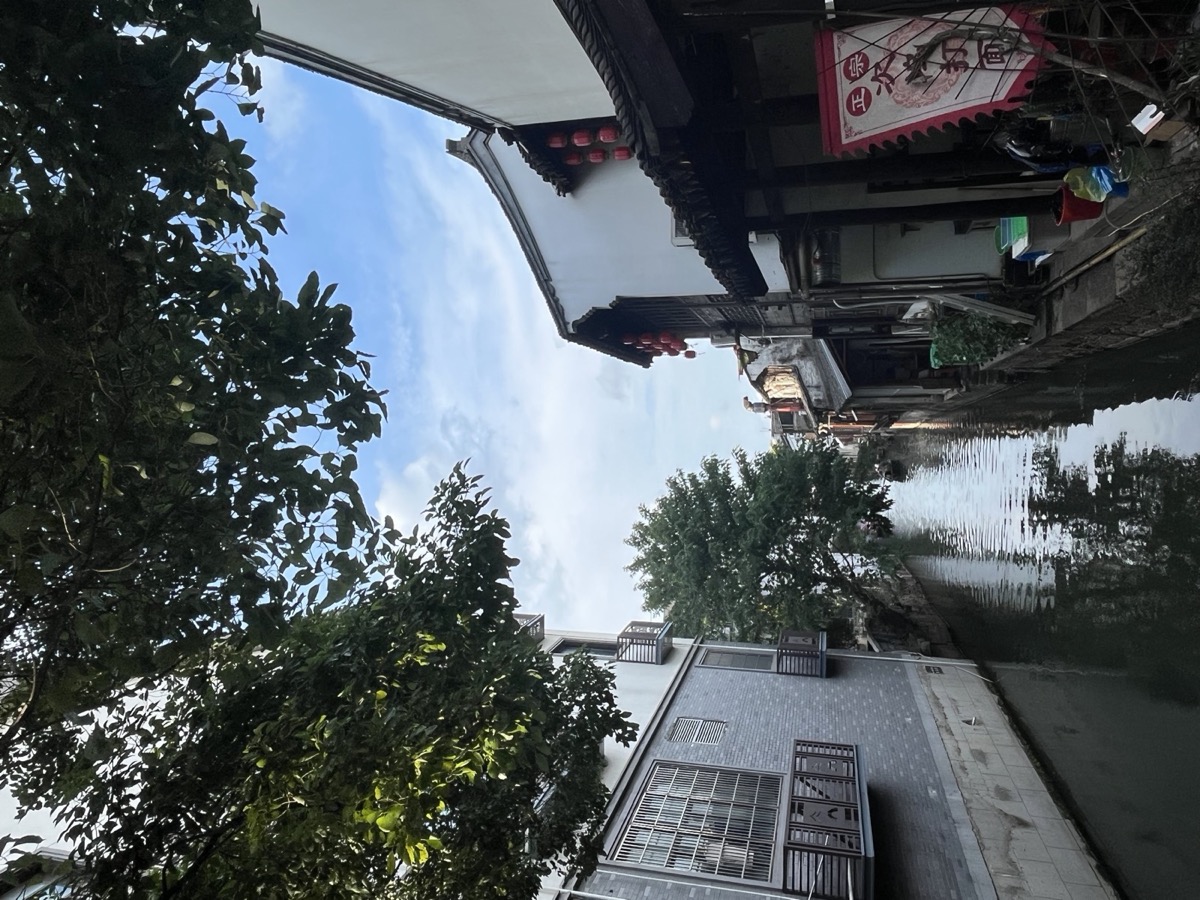
The tranquil northern stretch of Cangqiao Straight Street, where quiet neighborhood life continues undisturbed along the water.
2. In the Footsteps of China’s Literary Conscience
To understand why every Chinese person speaks of Shaoxing with quiet reverence, you have to understand Lu Xun (1881–1936).
If you grew up in the West, think of Lu Xun as George Orwell and Mark Twain rolled into one caustic, chain-smoking medical student turned revolutionary essayist. He discarded his medical career in Japan because he concluded that curing physical illnesses was useless if the intellectual soul of his country remained numb. His razor-sharp satire and haunting short stories became the bedrock of modern Chinese vernacular literature. Every single Chinese schoolchild spends years memorizing his childhood memories of Shaoxing.
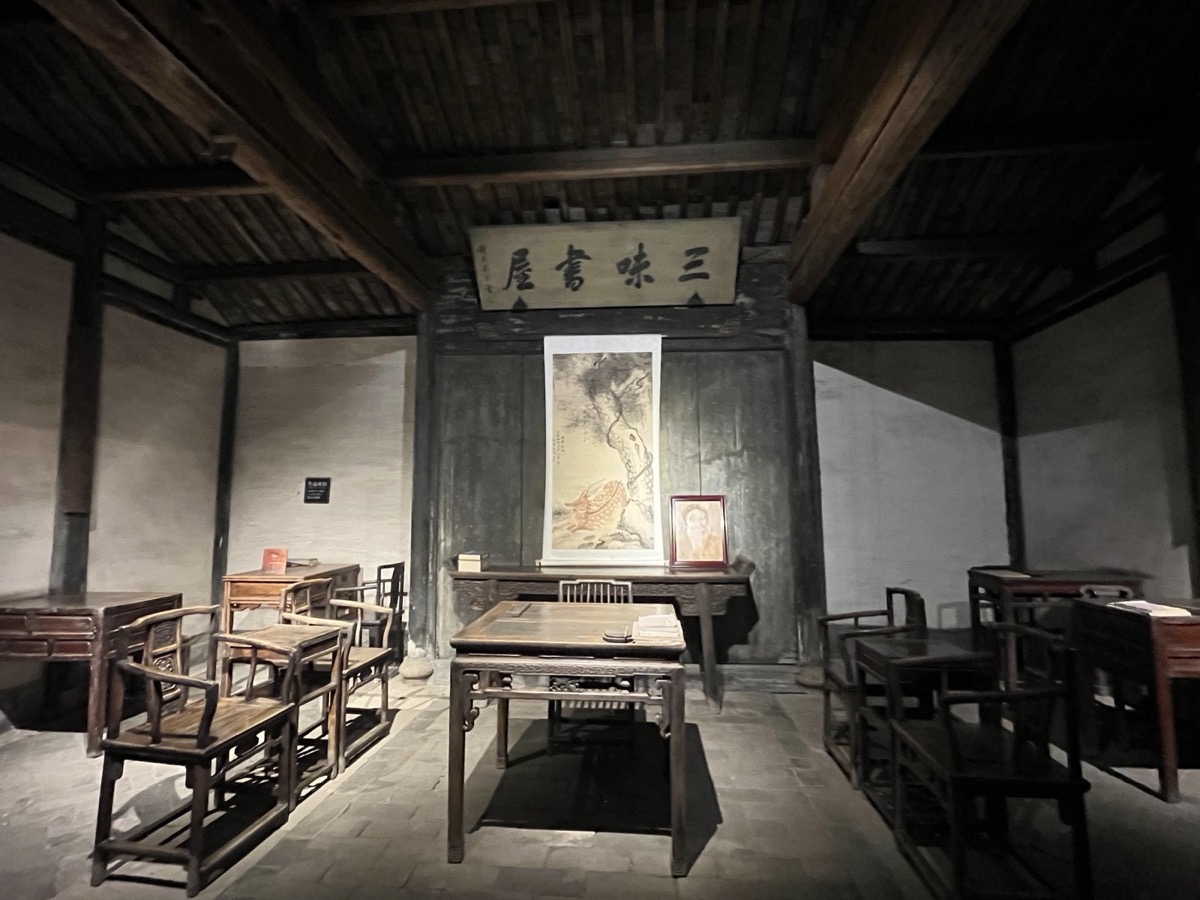
Sanwei Shuwu (Three Flavor Study), the private academy where young Lu Xun memorized classical texts under strict dynastic tutors.
Three Flavor Study & The Secret Carved Desk
At Lu Xun’s Native Place (鲁迅故里), you can walk through the exact rooms immortalized in his classic memoir From Hundred-Plant Garden to Three Flavor Study.
In the corner of Sanwei Shuwu (三味书屋), step up to the wooden partition and look closely at the desk in the far northeast corner. When Lu Xun was a twelve-year-old boy, he arrived late to school after spending the dawn hours running between pawnshops and herbal medicine stalls to care for his gravely ill father. After being sternly reprimanded by his tutor, the young boy carved the single Chinese character Zao (早, meaning “Early”) deeply into the varnished wood of his desk as a silent personal oath never to be late again. The desk remains preserved behind glass today, an indelible pilgrimage point for generations of students.
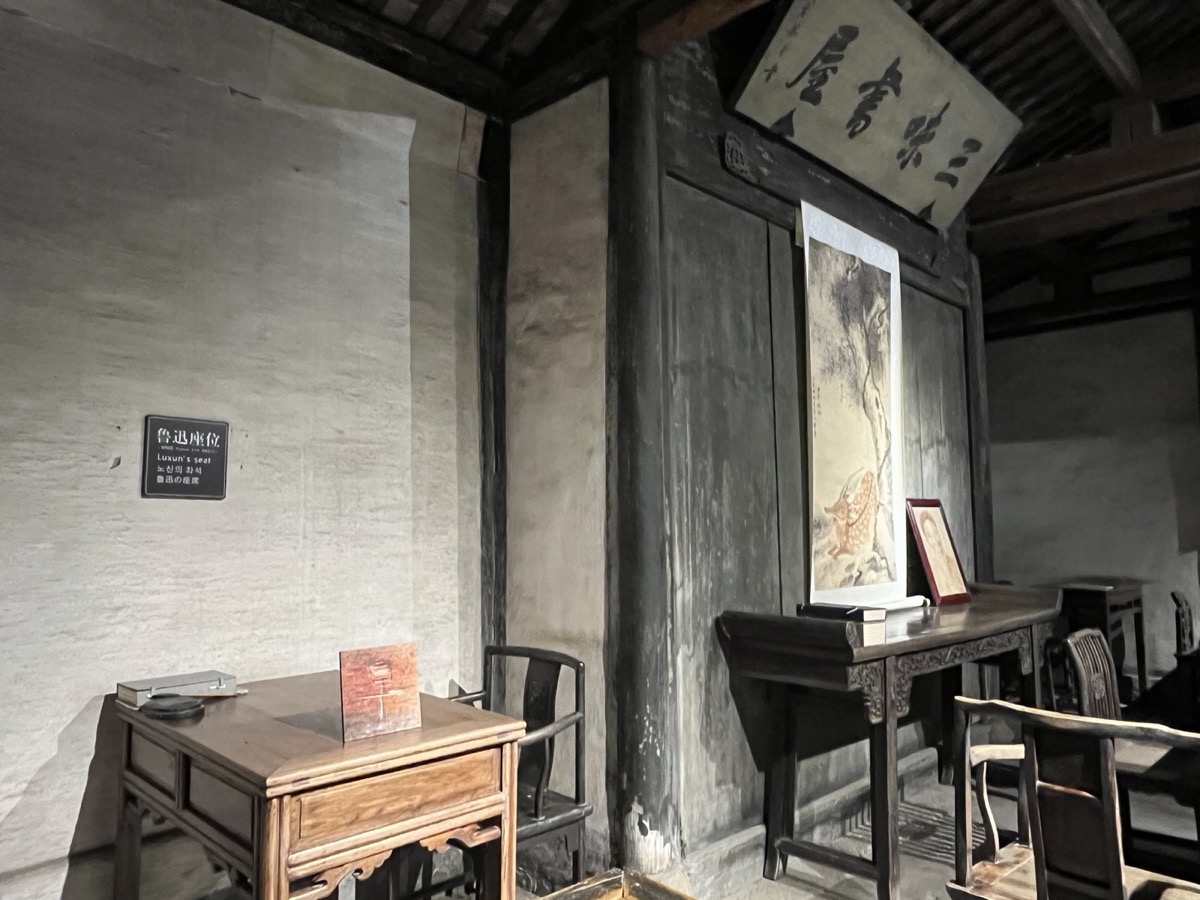
Lu Xun’s boyhood desk in the corner of the classroom, marked by the famous carved ‘Zao’ (Early) character.
[!IMPORTANT] Essential Booking Note for International Visitors Admission to Lu Xun’s Hometown is entirely free, but mandatory real-name time slots must be reserved in advance via the official WeChat mini-program (“绍兴文旅集团” or “绍兴鲁迅纪念馆”). On weekends and public holidays, slots fill up two to three days in advance. Foreign visitors can register using their physical passport numbers. Arrive right at the 8:00 AM opening or after 4:30 PM to explore the courtyards in contemplative silence.
Behind the family courtyard lies the Hundred-Plant Garden (百草园). While modern visitors might see only an understated garden of wild blackberries, mulberry trees, and stone wells, for anyone who has read Lu Xun’s prose, it feels alive with the spirit of childhood mischief: hunting for singing cicadas in the high branches, flipping over garden bricks to find scorpions, and listening to old nannies tell ghost stories in the summer twilight.
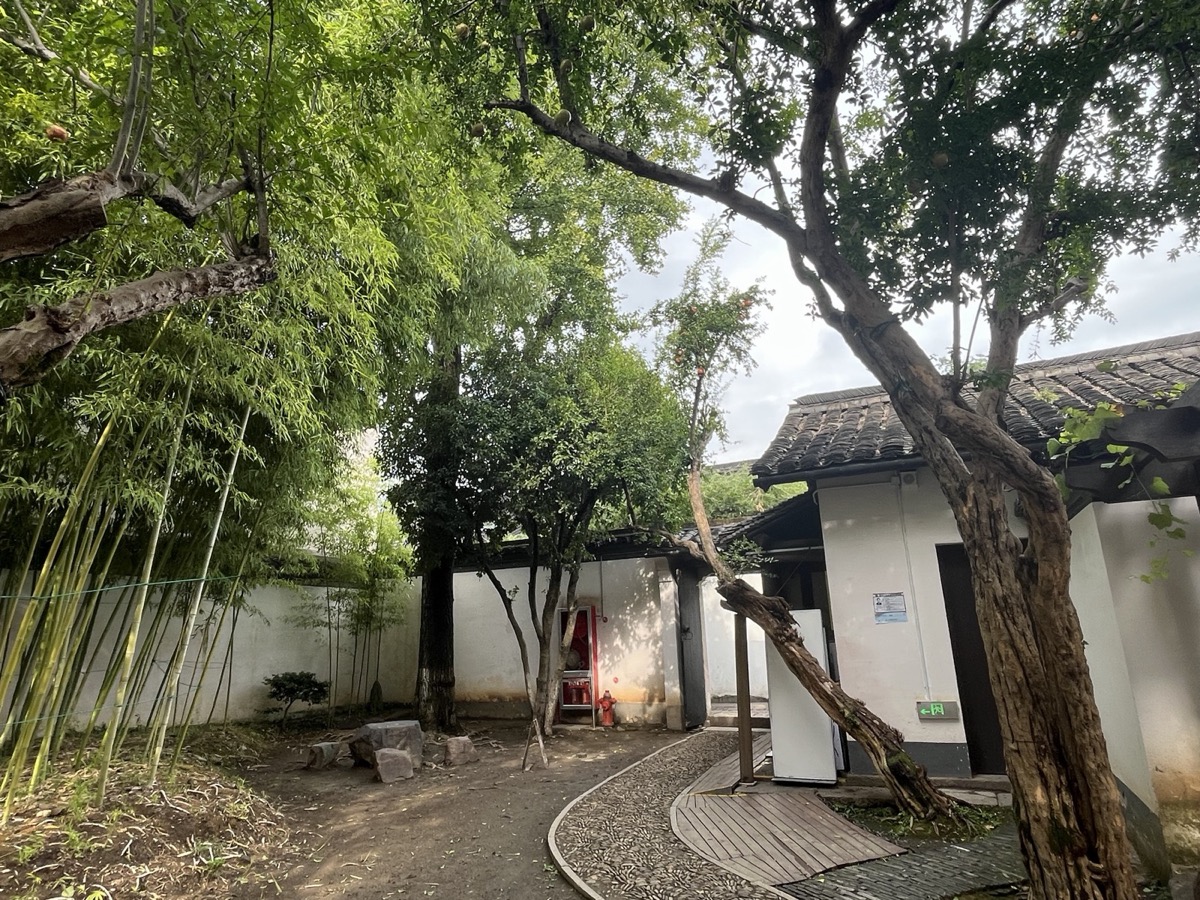
The Hundred-Plant Garden (Baicaoyuan), Lu Xun’s childhood playground of overgrown vines and stone wells.
Kong Yiji & Xianheng Hotel: A Bitter Bean Ritual
Just outside the memorial grounds sits Xianheng Hotel (咸亨酒店), an operating tavern founded in 1894 by Lu Xun’s grand-uncle. It is the setting of Kong Yiji, his devastating short story about an impoverished, robe-wearing scholar who never passed the imperial examinations, mocked by tavern patrons while scraping together copper coins for warm wine.
At the outdoor street-side counter, you can order Kong Yiji’s exact meal: a small pewter pot of warmed Tai Diao yellow wine and a porcelain bowl of spiced fennel beans (huixiangdou). The beans are soft, savory, and scented with star anise and cinnamon—the quintessential scholarly bar snack.
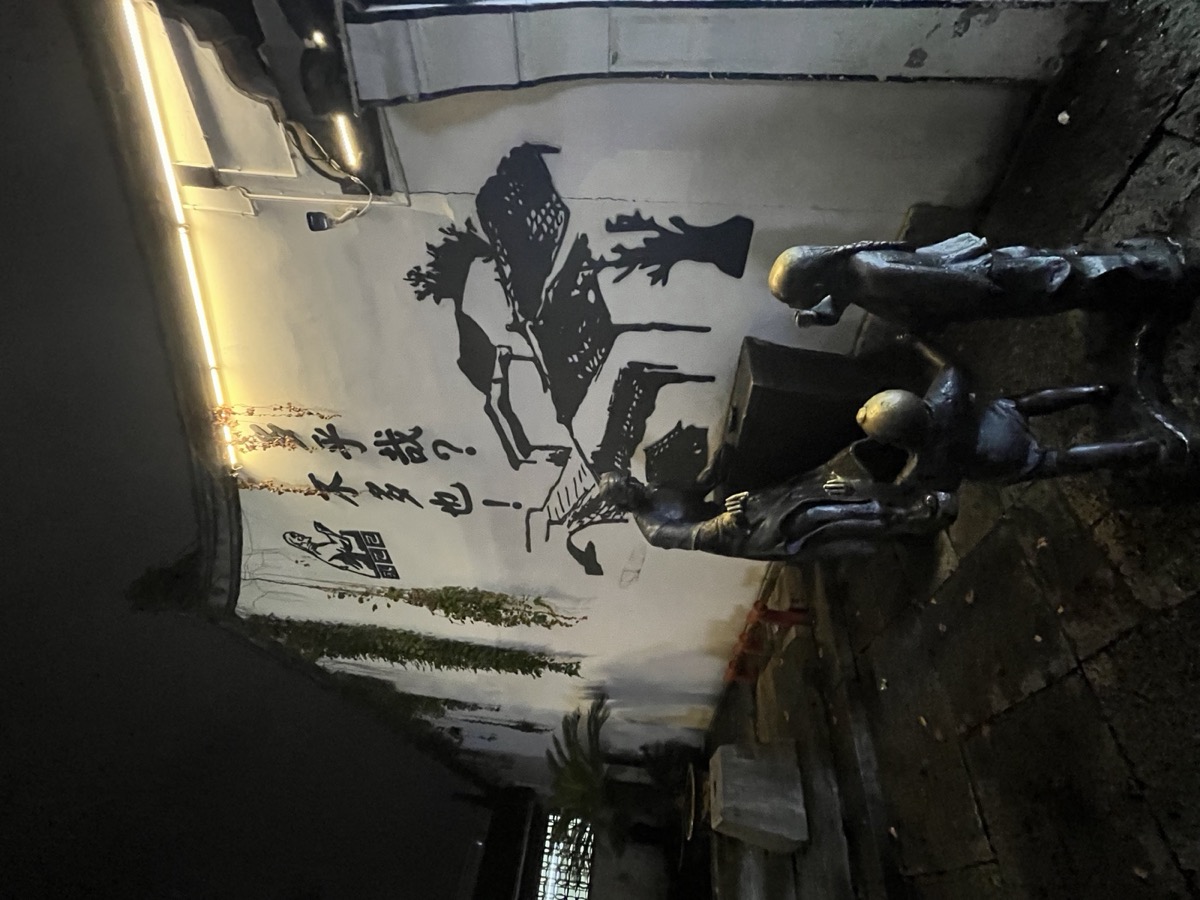
The bronze statue of Kong Yiji outside Xianheng Hotel, bearing his famous line on the whitewashed wall: ‘Is it much? Not much indeed!’ (多乎哉?不多也!).
3. The Calligraphy Sage & Mountain Gatherings
If Lu Xun is Shaoxing’s modern literary conscience, Wang Xizhi (303–361 AD) is its ancient spiritual anchor. Revered across East Asia as the “Sage of Calligraphy,” his fluid, expressive running script set the aesthetic standard for Chinese written art for the next seventeen centuries.
In the old quarter of Shusheng Guli (书圣故里), you can walk along Tishan Bridge (题扇桥), where legend says Wang Xizhi encountered an impoverished old woman crying because nobody was buying her plain hexagonal bamboo fans. Taking pity, the master dipped his brush and hastily inscribed five characters of poetry across each fan. The old woman was initially furious that he had “ruined” her clean paper, until crowds gathered and bid astronomical sums of silver for a single brushstroke from the master.
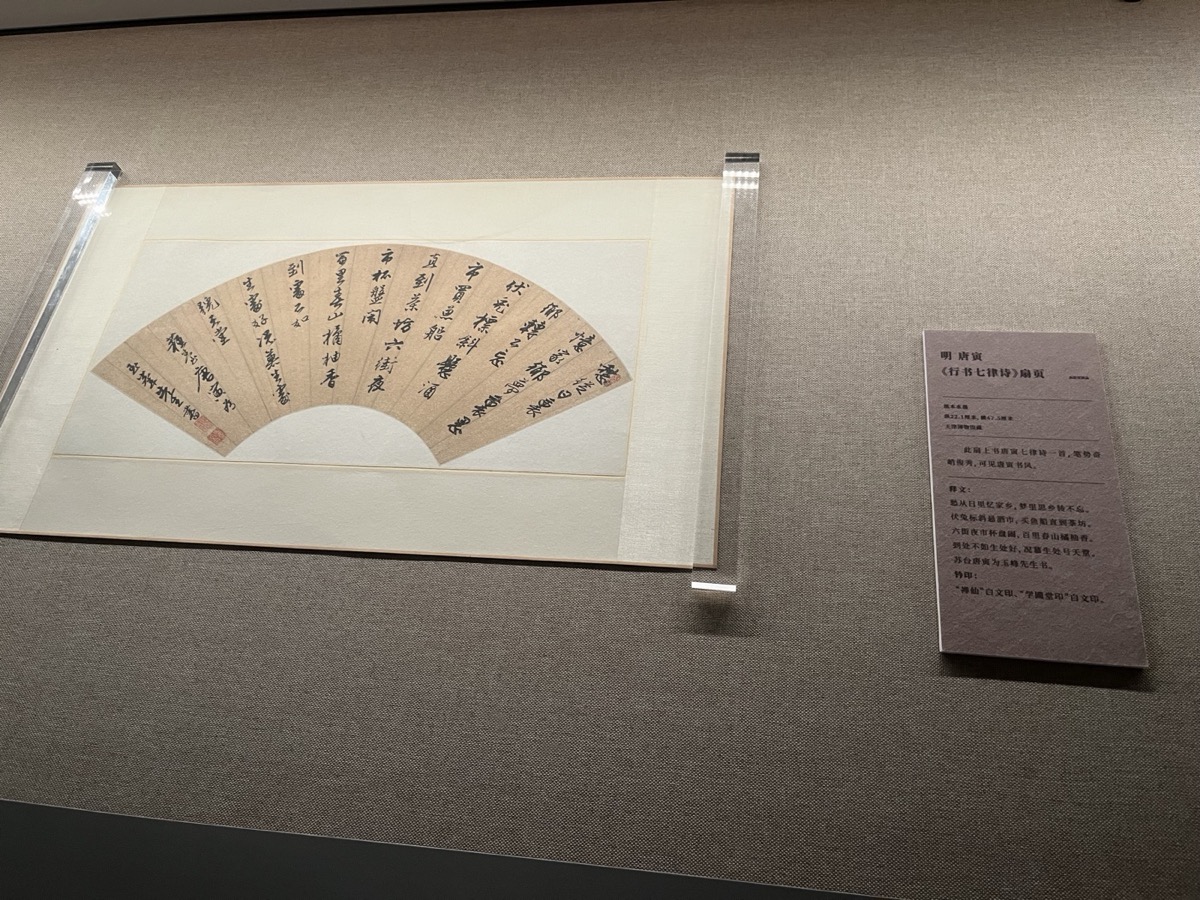
A classical calligraphy fan leaf from Ming Dynasty master Tang Yin (Tang Bohu), carrying forward Shaoxing’s ancient fan-inscribing traditions.
Lanting: The Orchid Pavilion & Floating Wine Cups
A twenty-five minute taxi ride southwest from the old town brings you to Lanting (兰亭, Orchid Pavilion). On the third day of the third lunar month in 353 AD, Wang Xizhi invited forty-one poets, musicians, and aristocrats to a spring purification festival along a winding mountain brook surrounded by dense bamboo groves.
Servants floated small wooden cups filled with rice wine down the winding stream. Whenever a cup drifted into an eddy and came to rest in front of a guest, that guest was required to compose a poem on the spot. If they failed, their penalty was to drink three full cups of wine. At the end of the gathering, Wang Xizhi picked up a brush made of mouse whiskers and, lightly inebriated on spring wine, penned the Lanting Xu (Preface to the Orchid Pavilion Poems)—widely regarded as the single greatest work of calligraphy in Chinese history.
For nostalgic film lovers, the bamboo paths and the tranquil Goose Pond at Lanting were also real-world filming locations for China’s legendary 1986 television series Journey to the West (Xiyouji), where the Monkey King sought sacred spring waters.
4. Secret Corners Most Travelers Miss
While mainstream day-trippers rush between Lu Xun’s study and the souvenir shops, Shaoxing hides several extraordinary off-grid treasures for travelers who appreciate raw, uncurated history.
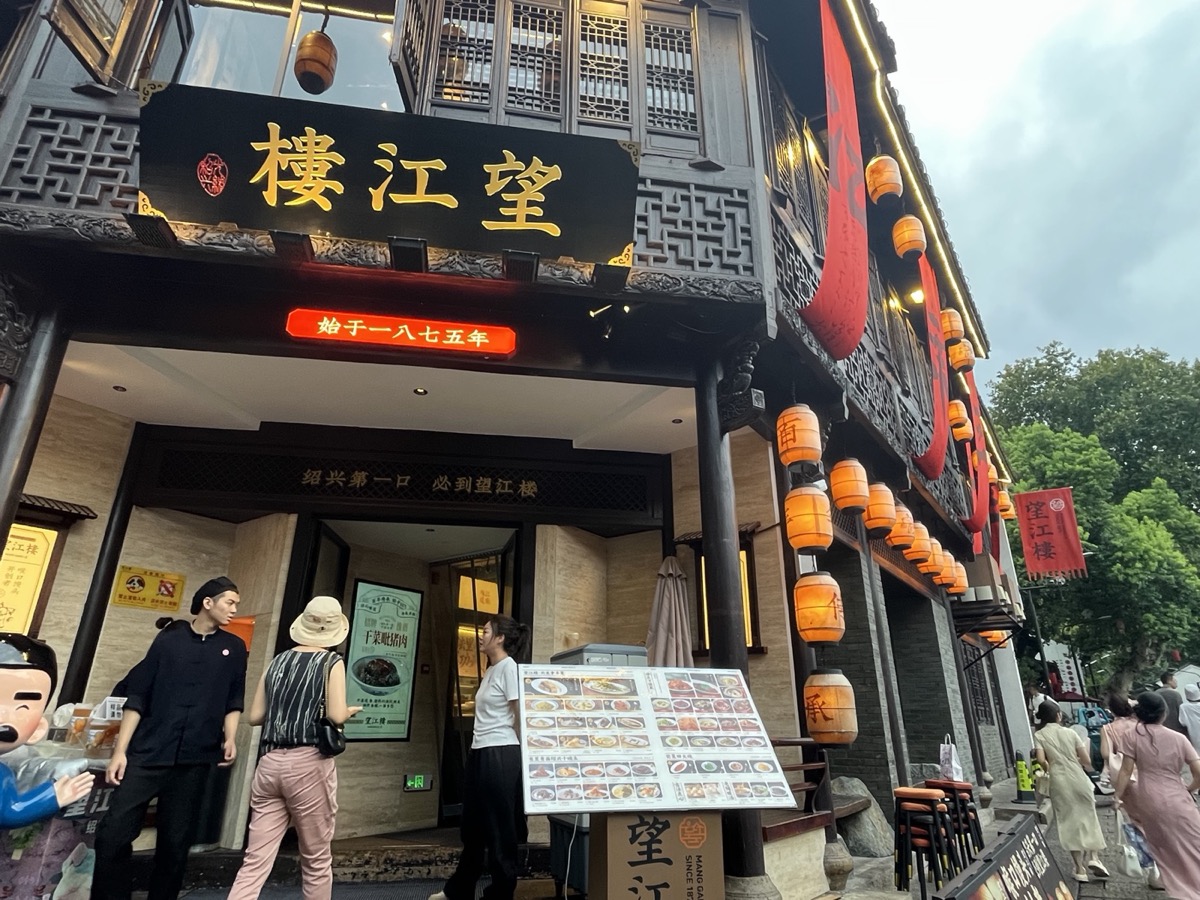
Wangjianglou, established in 1875: riverside dining under warm paper lanterns along the historic Yuecheng canals.
Yangshan Stone City: The Quarry Labyrinth
Located roughly twelve miles north of downtown, Yangshan Stone City (羊山石城) is an ancient open-pit quarry dating back over two millennia to King Goujian’s reign. Centuries of stonecutters carved deep into the limestone mountains, leaving behind a surreal landscape of sheer rock needles, hidden grottos, and deep ravines that look like an ancient natural fortress. Carved into one towering limestone pillar is a sixteen-meter-tall Buddha dating back to the Sui Dynasty (sixth century).
There is no entry fee, almost no signage, and very few tourists. Arrive around 3:30 PM on a clear afternoon, when dramatic beams of golden light pierce through the vertical rock chasms. Wear grippy hiking shoes, as the paths wind through natural stone gaps and damp mossy steps.
Yinshan Yue King’s Tomb
Tucked into tea-covered hills near Lanting sits the Yinshan Tomb of the King of Yue (印山越国王陵). Unearthed by archaeologists in the late 1990s, this is the monumental royal burial chamber of an ancient Yue monarch (likely the father of King Goujian) from the sixth century BC.
To protect the massive cedar coffins from decay, ancient builders blanketed the entire wooden burial chamber under one hundred and fifty tons of densely packed charcoal and sealed it beneath an impermeable layer of blue-grey river clay. Standing inside the dimly lit timber-framed chamber, surrounded by whole-log coffins carved from single ancient trees, you feel the hair on your arms stand up—it is a visceral, haunting encounter with China’s Spring and Autumn period.
Anchang Ancient Town: The Salted Meat Morning Market
If you want to experience water-town culinary craft before the tour buses wake up, set your alarm for 7:00 AM and head to Anchang Ancient Town (安昌古镇) on the city’s northern fringe.
Long before day-trippers arrive, Anchang’s covered wooden colonnades are buzzing with local trade. Master sugar pullers stretch boiling molasses into white spun candy (chebatang), generational sauce makers tend to rows of clay fermenting urns, and thousands of handmade pork sausages (lachang) cured with aged huangjiu hang like crimson curtains over the canal. The black-awning boats here charge roughly one-third of the city center prices, carrying you through peaceful residential canals where river life has changed remarkably little over the past two centuries.
5. Eating Like a Shaoxing Insider
Shaoxing’s culinary identity is built entirely around fermentation, salt, and the transformative power of yellow wine. While Cantonese food celebrates pristine freshness and Sichuan food worships chili oil, Shaoxing food relies on the deep, savory complexity of time.
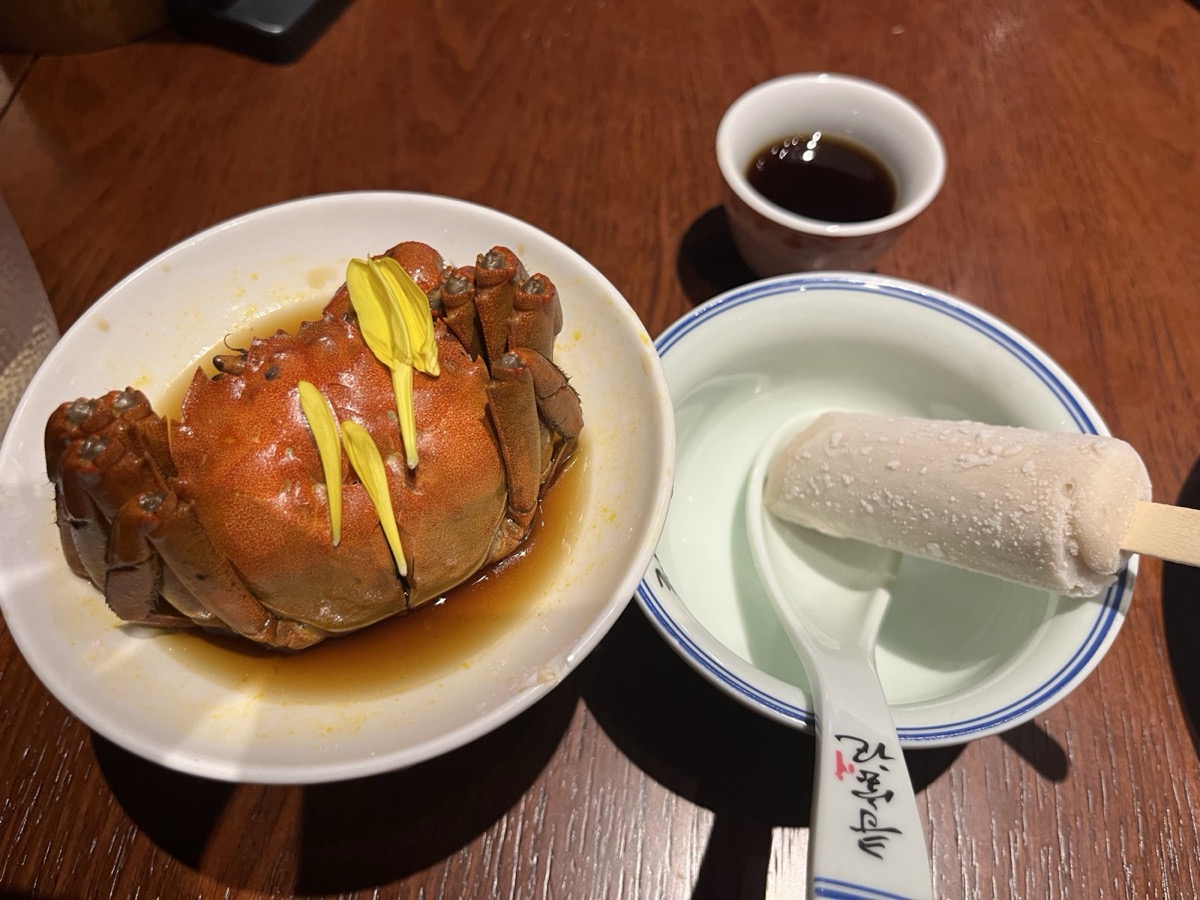
The signature culinary trio at Xunbaoji: whole chilled drunken crab steeped in 10-year huangjiu with chrysanthemum petals, paired with a yellow wine ice pop and warm Tai Diao wine.
The Huangjiu Culture: Wine You Can Eat
Shaoxing yellow rice wine (huangjiu) is not a harsh cooking spirit; in its premium, aged incarnations, it is one of the world’s great fortified beverages, closely resembling a complex Spanish Amontillado sherry or an aged French vin jaune. In Shaoxing, locals have turned this heritage drink into an art form that touches every hour of the day:
The Yellow Wine Popsicle (Huangjiu Bangbing, ¥5) is an absolute must-try. Creamy and pale ivory, it carries a subtle toasted nutty sweetness with chewy grains of fermented glutinous rice suspended inside. Locals joke that you should wait five minutes before driving after eating two, because real fermented huangjiu is blended directly into the dairy base.
For dessert, seek out warm caramelized Huangjiu Pudding (Huangjiu Buding), a silky egg custard drizzled with a reduced syrup of twenty-year yellow wine that converts even travelers who normally dislike alcoholic sweets.
Drunken Crab & River Feasts
At restaurants like Xunbaoji (寻宝记), which hosts live midday Yue Opera performances in traditional pavilion dining halls, order the Drunken Crab (Shu Zui Xie). Steamed lake crabs are steeped for days in a marinade of ten-year-old aged yellow wine, rock sugar, ginger slices, and dried yellow chrysanthemum petals. The crab meat turns meltingly sweet, while the rich golden roe absorbs a deep, floral wine perfume that pairs impeccably with warm rice.
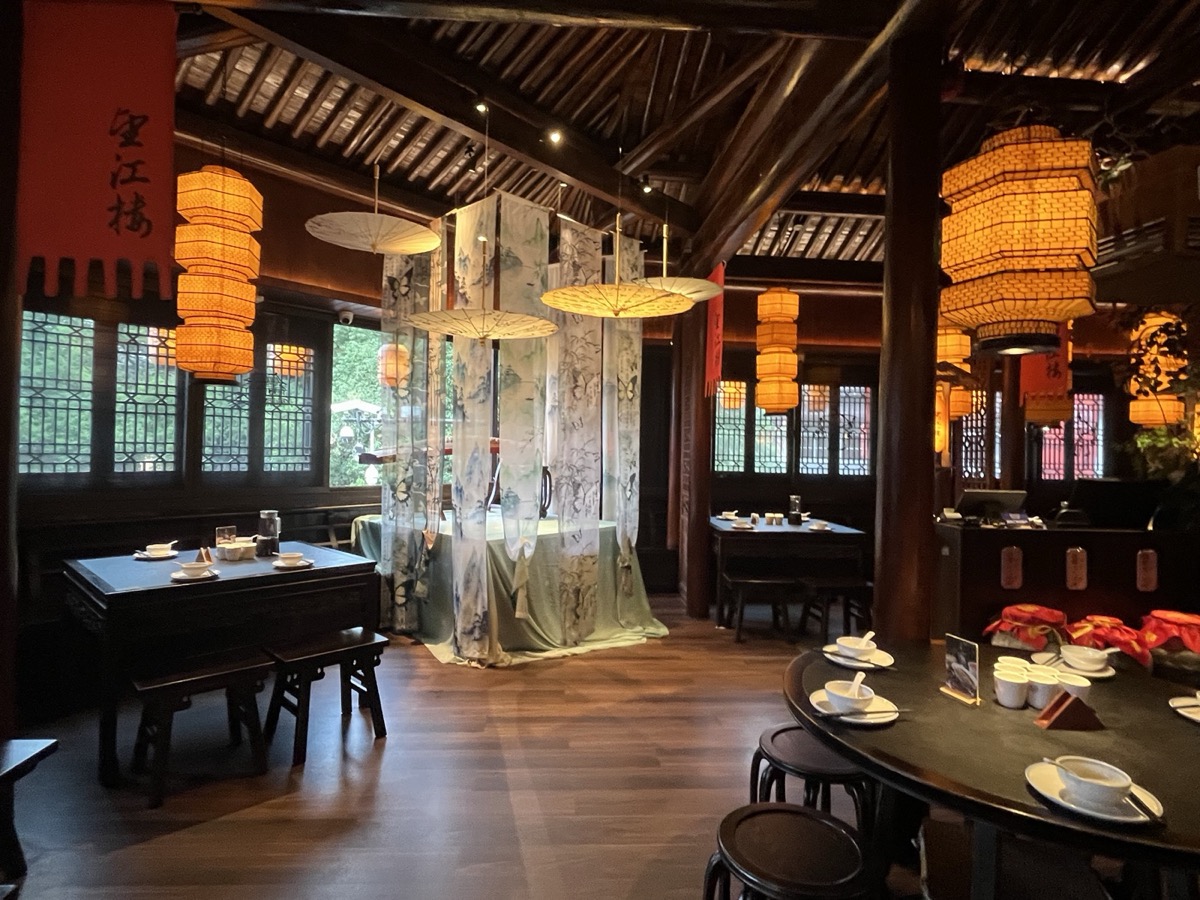
Inside a traditional Yue Opera dining tavern: paper lanterns, silk landscape screens, and the soothing sounds of regional opera during dinner.
The Fermented Rites of Passage
You cannot leave Shaoxing without encountering its fermented side. Shaoxing stinky tofu (chou doufu) is entirely different from the pitch-black Hunan variety; it is golden-yellow, fried until the paper-thin skin blisters with crackling crunch, while the interior remains as silky and mild as fresh cream.
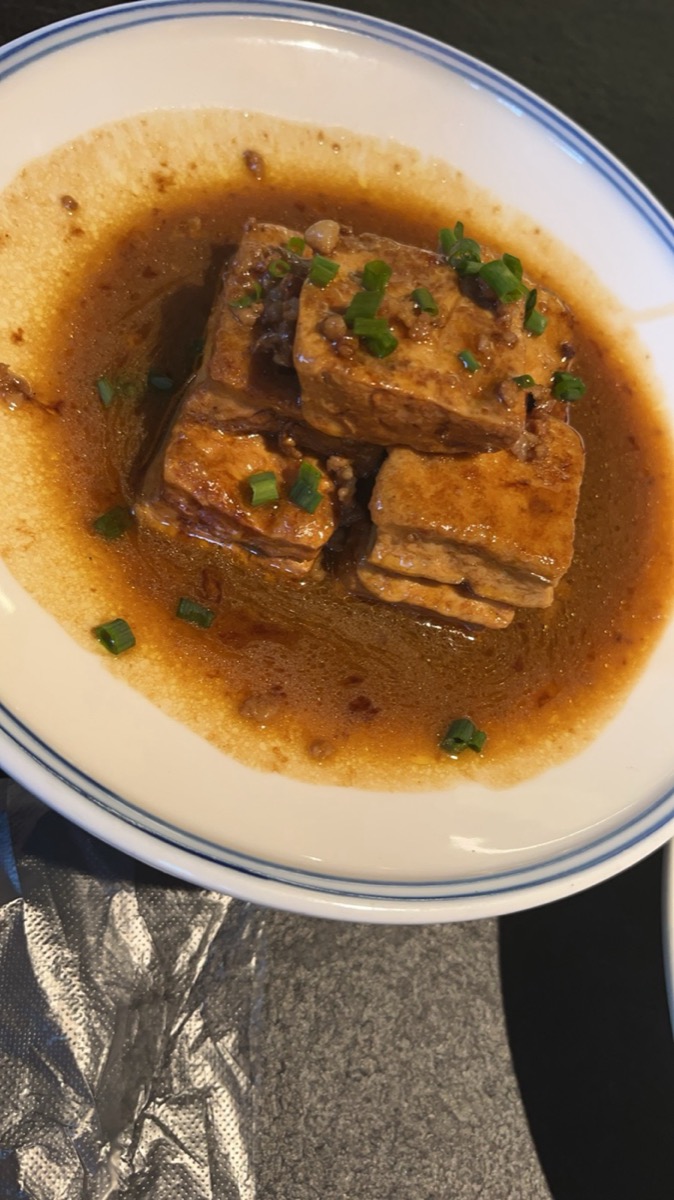
Savory braised stinky tofu in a rich minced pork reduction—comfort food for Jiangnan locals, an adventurous delight for visitors.
For the truly fearless culinary explorer, there is Zheng Shuangchou (蒸双臭, “Steamed Double Stinky”)—a rustic earthenware bowl combining stinky tofu with fermented amaranth stalks (mei xiancai geng). Steamed with sesame oil and minced chili, the amaranth stalks have an intensely pungent, compost-like aroma that gives way to a surprisingly cooling, savory umami jelly inside the hollow fibers. It is an acquired taste even among many younger Chinese, but revered by elder locals as the pinnacle of Shaoxing terroir.
For a comforting breakfast, look for street stalls serving Mian Bobo (面饽饽)—a warm scallion pancake wrapped around freshly fried dough sticks (youtiao) brushed with sweet fermented bean sauce—or duck into an alley shop for a steaming bowl of Ciwu hand-pulled noodles (Ciwu damian), famous for their chewy, springy bite and rich pork lard broth.
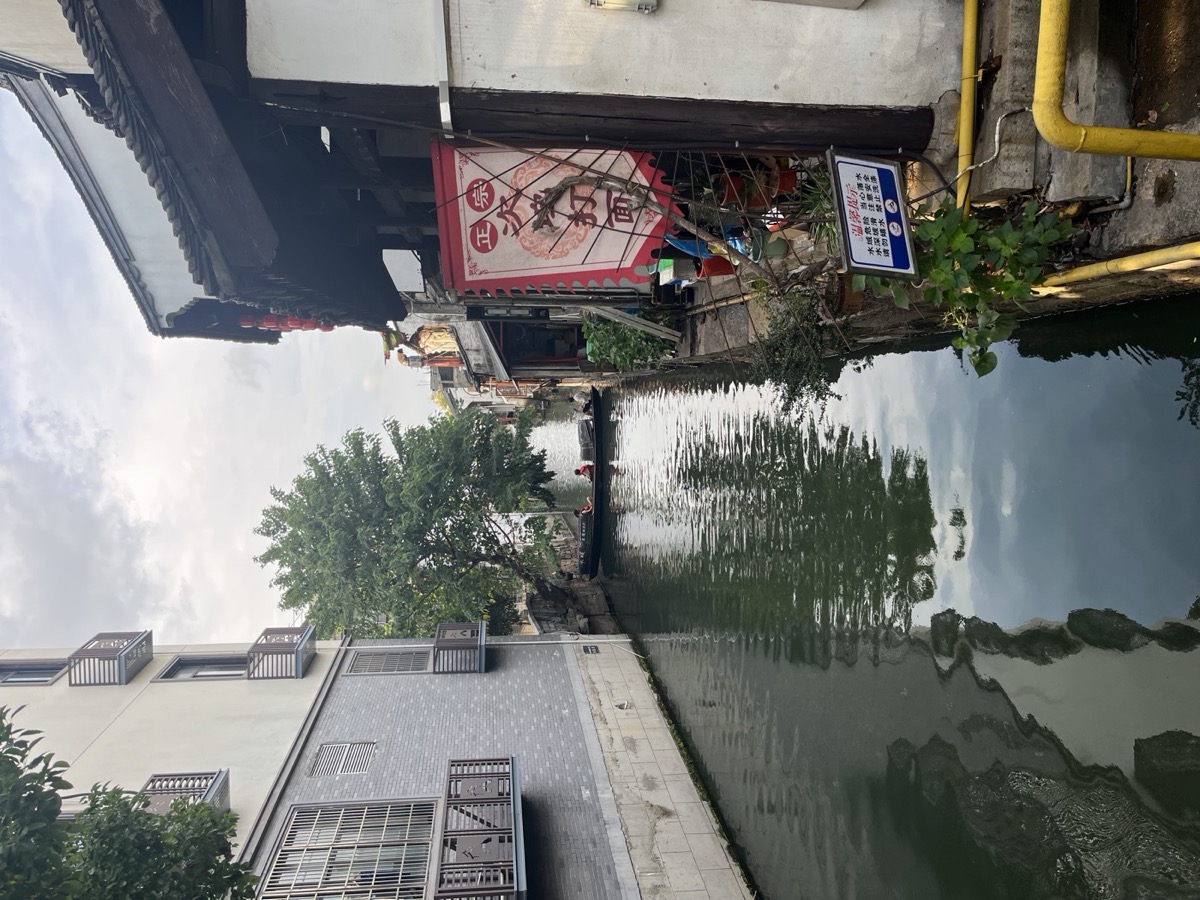
A canal-side noodle banner advertising ‘Authentic Ciwu Hand-Pulled Noodles’ along the water in downtown Shaoxing.
6. How to Get There & Practical Logistics
Part of Shaoxing’s charm is how astonishingly accessible it is, despite feeling worlds away from coastal hyper-modernity.
Train Connections
High-speed bullet trains depart from Shanghai Hongqiao Railway Station to Shaoxing North Station every fifteen to twenty minutes throughout the day. The journey takes just one hour and sixteen minutes and costs approximately sixty-five yuan (about nine US dollars). You can book your seat directly through the official 12306 English app—check our step-by-step China High-Speed Train Guide for smooth ticket pickup without paper passes.
If you are already exploring Hangzhou, the ride from Hangzhou East Station to Shaoxing North takes a mere nineteen minutes, making it an effortless afternoon or overnight extension.
Upon arriving at Shaoxing North Railway Station, you do not even need to hail a taxi. Shaoxing Metro Line 1 connects directly into the basement of the train station, whisking you straight into the heart of the historic district at Lu Xun’s Native Place Station in under twenty-five minutes. You can scan the subway turnstiles directly using the transit mini-programs inside Alipay or WeChat.
The 240-Hour Visa-Free Opportunity
International travelers entering through Shanghai Pudong Airport (PVG), Shanghai Hongqiao (SHA), or Hangzhou Xiaoshan Airport (HGH) qualify under China’s 240-Hour Visa-Free Transit (TWOV) Scheme. Because Zhejiang Province and Shanghai share a unified transit zone, you can legally spend up to ten days traveling between Shanghai, Hangzhou, and Shaoxing on an onward flight ticket without ever applying for a Chinese visa in advance. You can verify your exact passport and transit eligibility on our Interactive Transit Visa-Free Checker.
Budget & Pace
For slow travelers and digital nomads, Shaoxing is exceptionally gentle on the wallet. A beautifully restored canal-side courtyard guesthouse typically ranges between ¥260 and ¥420 ($36–$58 USD) per night. Monthly living costs for long-term remote workers average between $750 and $1,100 USD—roughly 65% cheaper than downtown Shanghai and 40% cheaper than Hangzhou.
If you stay for a week of quiet writing or slow photography, you will quickly discover the rhythm of the city: early mornings under the willows before the shops open, unhurried afternoons with a notebook in a canal-side teahouse, and twilight evenings scented with aged yellow wine, watching the foot-pedaled boats cut dark, silent ripples across the ancient water.
Plan Your Shaoxing Exploration
Before setting off, make sure your mobile connectivity and digital payments are properly configured using our Interactive 10-Step China Arrival Checklist. If you are planning an extended journey through the Yangtze River Delta or need personalized translation, medical coordination, or bespoke cultural route curation in Zhejiang and Shanghai, discover our China Stay Local Advisory Services.
Curator of China Nomad Guide. Specializing in bespoke route architecture, bilingual on-the-ground fixer services, and neutral medical/dental tourism logistics. Based between Chengdu, Yunnan, and Shanghai.
Get the China Stay China Arrival Kit & Checklist
Don’t get locked out without connectivity or payment at the border. Instant access to our interactive 12-step field guide + offline 1-page PDF printable cheat sheet covering pre-flight eSIMs, foreign card Alipay binding, PSB police registration, and railway ticketing.
Curated by Villanelle (IG: @v.forvillanelle • hello@chinastay.org). Zero spam.