The system changed in 2026 — and almost nobody noticed
If you last researched healthcare in Guangdong two years ago, what you found was a fragmented collection of hotel-style international clinics with opaque prices, a handful of hospitals willing to register foreign patients, and a lot of quiet improvisation by staff translating through phone apps.
That system still exists. But alongside it, a comprehensive provincial public framework is now running, and it is significantly more structured than most international travelers realise.
In March 2026, the Guangdong Provincial Health Commission (广东省卫生健康委), the Provincial Medical Insurance Bureau, and the Provincial Drug Administration jointly announced the first batch of 25 Guangdong International Medical Service Pilot Hospitals. The pilot runs for the 2026–2027 period across six key workstreams: demonstration zones, standardized hospital management, cross-border direct payment, advanced clinical technology, internet-based cross-border telemedicine, and international clinical operations.
In October 2026, Guangzhou introduced “Sui Kang Lü” (GZ Medigo / 穗康旅), the province’s first unified digital medical tourism platform, debuted at the Canton Fair.
The practical answer to “can a foreigner easily see a doctor in Guangdong?” is no longer “it depends on who you know.” It is now: yes — and here is the exact operational framework.
What “international medical service” actually means
The official administrative definition is specific and distinct from standard Chinese domestic healthcare:
International medical services refer to healthcare delivered to Hong Kong, Macao and Taiwan residents, foreign nationals residing in or visiting Guangdong, and overseas patients seeking cross-border care — adhering to international quality control, clinical safety, and multilingual service standards, settled via overseas commercial health insurance, direct billing, or foreign currency settlement.
Three critical structural realities follow from this:
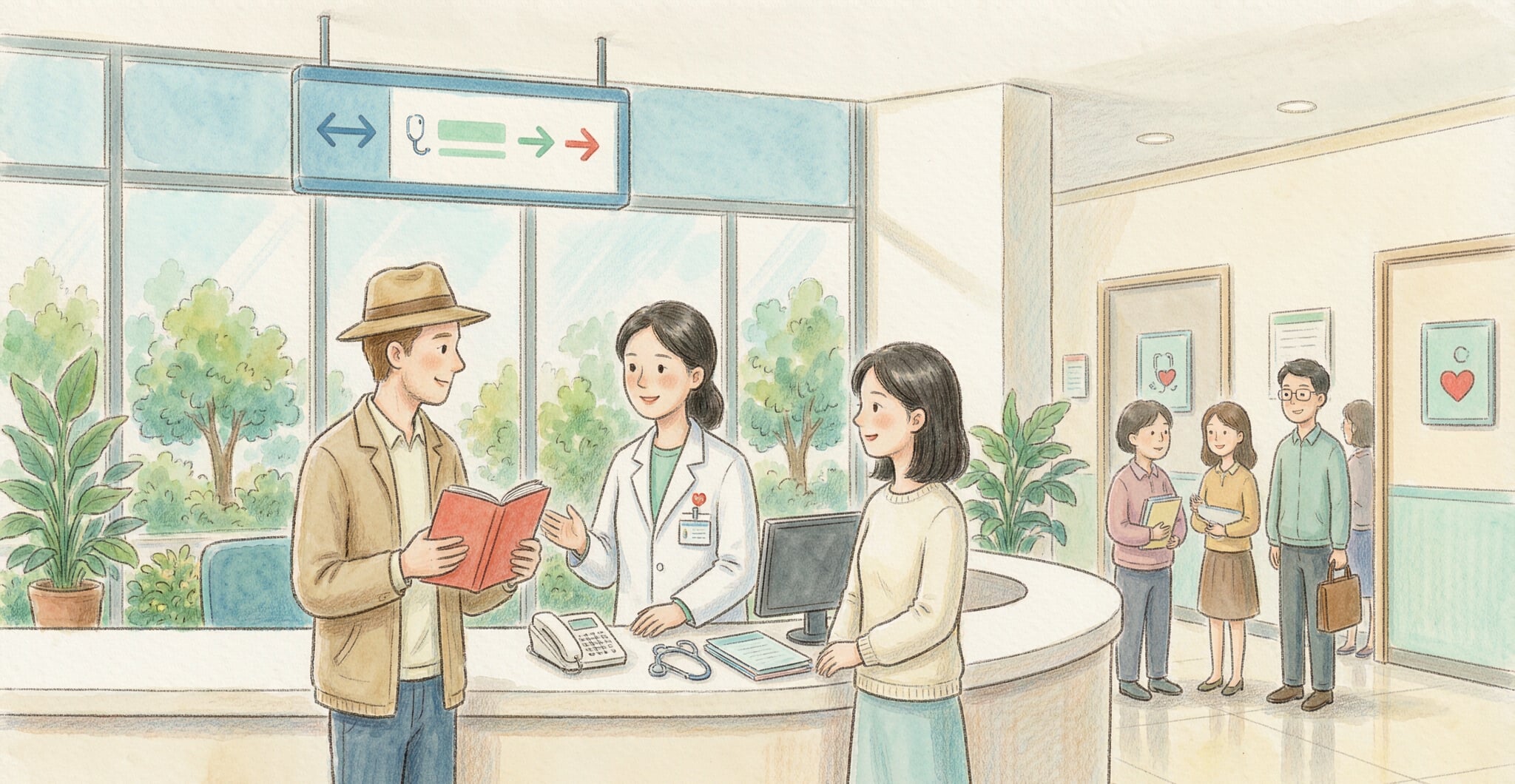
- Independent from basic Chinese public medical care: Pilot hospitals operate dedicated international zones with independent reception desks, private consultation rooms, and English-speaking patient guides. Specialists only conduct international clinics outside their routine public outpatient quotas, ensuring no crowd-out of public resources.
- Flexible, independent commercial pricing: International wings set market-based rates. They are not subsidised by domestic Chinese social health insurance (Yibao). Patients pay via foreign commercial policies, cross-border insurance direct settlement, or out of pocket.
- Monitored two-year accreditation: The 25 designated facilities are monitored under continuous evaluation metrics. Facilities failing clinical translation or service standards risk loss of pilot accreditation.
The 25 Designated Pilot Hospitals
The initial cohort encompasses premier provincial teaching hospitals, specialized national institutes, leading Traditional Chinese Medicine (TCM) centers, and accredited private medical groups:
Guangzhou (15 Institutions)
- Guangdong Provincial People’s Hospital (广东省人民医院) — Renowned Xiehe Senior Medical Centre with 24/7 multilingual translation and patient guide services.
- First Affiliated Hospital, Sun Yat-sen University (中山一院 - 越秀 & 南沙) — Comprehensive quaternary teaching hub with academician-led clinics.
- Sun Yat-sen Memorial Hospital (中山大学孙逸仙纪念医院)
- Third Affiliated Hospital, Sun Yat-sen University (中山大学附属第三医院)
- Zhongshan Ophthalmic Centre (中山大学中山眼科中心) — Ranked #1 in ophthalmology nationwide.
- Sun Yat-sen University Cancer Centre (中山大学肿瘤防治中心)
- Hospital of Stomatology, Sun Yat-sen University (中山大学光华口腔医学院附属口腔医院) — Premier dental and maxillofacial center.
- Sixth Affiliated Hospital, Sun Yat-sen University (中山大学附属第六医院)
- Nanfang Hospital of Southern Medical University (南方医科大学南方医院)
- Zhujiang Hospital of Southern Medical University (南方医科大学珠江医院)
- First Affiliated Hospital of Jinan University (暨南大学附属第一医院)
- Guangdong Provincial Hospital of Traditional Chinese Medicine (广东省中医院) — One of the world’s highest-volume TCM hospitals, serving tens of thousands of international patients annually.
- First Affiliated Hospital of Guangzhou Medical University (广州医科大学附属第一医院) — National Respiratory Medicine Medical Centre (origin of Academician Zhong Nanshan’s team).
- Guangzhou First People’s Hospital (广州市第一人民医院)
- Guangzhou Women and Children’s Medical Centre (广州市妇女儿童医疗中心)
Shenzhen (4 Institutions)
- The University of Hong Kong–Shenzhen Hospital (香港大学深圳医院) — Pioneers in international clinical governance, featuring direct billing with over 30 international insurance underwriters.
- Shenzhen People’s Hospital (深圳市人民医院)
- Peking University Shenzhen Hospital (北京大学深圳医院)
- Southern University of Science and Technology Hospital (南方科技大学医院)
Zhuhai, Foshan & Greater Bay Area (6 Institutions)
- Zhuhai People’s Hospital (珠海市人民医院)
- Shantou University Medical College First Affiliated Hospital (汕头大学医学院第一附属医院)
- Guangdong Clifford Hospital (广东祈福医院) — First hospital in China accredited by JCI (Joint Commission International).
- Fosun Chancheng Hospital (佛山复星禅诚医院)
The Digital Layer: “Sui Kang Lü” (GZ Medigo)
Launched by the Guangzhou International Medical Tourism Service Centre, Sui Kang Lü (穗康旅) provides a single digital gateway for international patients:
- Multilingual Scheduling: Direct online doctor selection, appointment reservation, and medical record access in English and Chinese.
- International Payment & Direct Billing: Seamless integration with international credit cards (Visa, Mastercard), mobile digital wallets (see our Alipay & WeChat Pay foreign setup guide), and direct electronic insurance verification.
- Concierge Care Pipeline: End-to-end coordination bridging pre-arrival consultation, airport-to-clinic transport, on-site certified medical interpreters, hospital admission, and post-discharge follow-ups.
| Practical Aspect | Traditional Hospital Visit | Pilot Hospital + Sui Kang Lü |
|---|---|---|
| Booking & Registration | Chinese phone hotline or queueing at 07:00 AM | Digital English app booking with scheduled arrival window |
| Language & Consultation | Informal mobile phone translation apps | Certified medical interpreters or fluent bilingual doctors |
| Payment Flow | Full cash/RMB debit prepay, collect paper receipts | Direct insurance billing (zhifu) or foreign cards |
| Post-Care Records | Handwritten paper cards in Chinese | Digital bilingual medical summaries and pathology reports |
The “Hong Kong and Macao Medicines and Devices Access” Channel
A vital component of the Greater Bay Area healthcare integration is the “Gang Ao Yao Xie Tong” (港澳药械通) policy.
Under this mechanism, accredited mainland pilot hospitals in the GBA can import and administer clinical drugs and medical devices that are approved and commercially used in public hospitals in Hong Kong or Macao, even if they have not yet completed standard national regulatory registration on the mainland. Over 170 types of advanced oncology drugs, rare disease therapeutics, and precision surgical devices are currently authorized across 71 medical facilities.
Costs & Commercial Insurance Realities
International medical care in Guangdong operates on private fee schedules. It is significantly more affordable than comparable private care in the United States, Singapore, or Hong Kong, but more expensive than standard Chinese domestic wards:
- Specialist Consultation: ¥300 – ¥800 RMB (~$42 – $110 USD) for chief physicians (zhuren yishi).
- Comprehensive Annual Health Screening: ¥2,500 – ¥6,500 RMB (~$350 – $900 USD) including high-resolution CT scans, advanced blood chemistry, and ultrasound.
- Dental Cleaning & Preventative Care: ¥350 – ¥700 RMB (~$50 – $98 USD) in hospital stomatology departments.
Direct Billing & Insurance Protocols
Top facilities (notably HKU-Shenzhen Hospital and Guangdong Provincial People’s Hospital) maintain direct settlement agreements with major global insurance carriers including Bupa Global, Cigna Global, Allianz Care, Aetna International, MSH China, and Ping An Health.
Checklist before scheduling:
- Confirm whether your insurer requires a Guarantee of Payment (GOP) prior to outpatient consultations.
- Verify if your policy covers the specific international department (guoji yiliao bu) or only standard clinics.
- Keep copies of your passport photo page and entry stamp readily available for file opening.
Three Common Mistakes to Avoid
- Mistake 1: Expecting Social Insurance Coverage. International wings do not accept China’s public medical insurance (Yibao) or standard low-cost state subsidies. They are private-tier services.
- Mistake 2: Forgetting Physical Passport Documents. Even if you have registered your passport on WeChat or hospital mini-programs, hospital registration clerks are legally required to verify your physical passport on your initial visit.
- Mistake 3: Overlooking Nearby GBA Cities. If you are based in Shenzhen, Zhuhai, or Dongguan, you do not need to journey into central Guangzhou. Facilities like HKU-Shenzhen Hospital offer world-class English-language clinical teams locally, reachable in under 30 minutes via inter-city high-speed train (see our 12306 High-Speed Train Guide). If exploring Guangzhou itself, consult our in-depth Guangzhou Slow Travel Guide for neighborhood logistics.
Summary Checklist
- Immediate Outpatient Need: Open Sui Kang Lü or visit the official international department portal of the nearest pilot hospital.
- True Medical Emergency: Dial 120 directly for emergency ambulance transit to the nearest hospital triage center.
- Prescription Refills: Carry your original foreign prescription along with the generic pharmaceutical chemical name (INN), as brand packaging frequently differs in China.
Related Medical & Practical Resources
- China Medical & Dental Tourism Portal: Procedure price benchmarks, top Tier-3 international wings across China, and savings guide.
- Medical & Dental Tourism in China Guide: In-depth overview of elective care, dental implants, and MRI imaging in China.
- On-Ground Hospital Support & Advisory: Pre-departure planning sessions and bilingual hospital guiding.
- China Arrival Checklist: Complete 12-step preparation checklist for foreign arrivals.
Curator of China Nomad Guide. Specializing in bespoke route architecture, bilingual on-the-ground fixer services, and neutral medical/dental tourism logistics. Based between Chengdu, Yunnan, and Shanghai.
Get the China Stay China Arrival Kit & Checklist
Don’t get locked out without connectivity or payment at the border. Instant access to our interactive 12-step field guide + offline 1-page PDF printable cheat sheet covering pre-flight eSIMs, foreign card Alipay binding, PSB police registration, and railway ticketing.
Curated by Villanelle (IG: @v.forvillanelle • hello@chinastay.org). Zero spam.