Most international travelers know Guangzhou as a 20-million-person southern megacity — a blur of Canton Fair convention halls, soaring Zhujiang New Town towers, and Michelin-starred morning dim sum. But beneath its commercial hustle lies one of southern China’s most deeply rooted cultural landscapes: the Pearl River Delta’s historic water towns and ancestral clan settlements.
For remote workers and slow travelers seeking atmospheric living, Shawan Ancient Town (沙湾古镇) in Panyu District offers an extraordinary retreat. Situated less than an hour from central Guangzhou, Shawan presents 800 years of Lingnan architecture, wok-ear pediment rooftops (wok-yi uk), towering walls crafted from compacted oyster shells, and a vibrant community of artisan workshops and traditional Cantonese food purveyors.
Whether you are staying in Panyu for focused remote work or taking a weekend cultural deep-dive from Tianhe or Haizhu, here is everything you need to navigate Guangzhou’s heritage heartland.
Quick Facts for Slow Travelers
- District: Panyu District (番禺区), Southern Guangzhou
- Estimated Monthly Budget: $1,250 – $1,650 USD (¥9,000 – ¥11,800 RMB)
- Heritage Highlights: Shawan Ancient Town, oyster-shell walls (hao-ke qiang), wok-ear brick houses (wok-yi uk), Guangdong Cantonese music cradle (Guangdong Yinyue)
- Transit from Downtown: Metro Line 3 to Panyu Square (番禺广场), then 15-minute taxi or bus Panyu 67 / 68
- Climate: Humid subtropical; warm winters, lush spring blossoms, hot and rainy summers
Shawan Ancient Town: The Lingnan Architectural Marvel
Founded during the Southern Song Dynasty (1127–1279), Shawan is celebrated across Guangdong as a living museum of Lingnan clan civilization. Unlike over-commercialized canal towns with identical souvenir stalls, Shawan remains an active residential enclave where multigenerational families dry citrus peel on woven bamboo trays, sip oolong tea under banyan trees, and converse in melodious Panyu Cantonese.
1. Oyster-Shell Walls (蚝壳墙)
Among Shawan’s most distinctive architectural treasures are its ancient oyster-shell walls. During the Ming and Qing dynasties, local builders dredged massive sea oyster shells from the Pearl River estuary, layering them diagonally with red clay, brown sugar, and boiled glutinous rice mortar.
These walls provided natural climate control: the serrated calcium shell surfaces reflect scorching summer sunlight, deter climbing intruders, resist salt moisture and typhoons, and insulate the interior from coastal dampness. The most famous example, at the Guansheng Ancestral Hall (留耕堂), features towering walls that have withstood torrential monsoons for over four centuries.
2. Wok-Ear Pediments (镬耳屋)
Glance upwards along Chepi Street or Anning West Street, and you will notice roofs capped with undulating brick pediments resembling the two handles of a traditional Cantonese iron wok.
Historically constructed by wealthy gentry, wok-ear walls served dual purposes: they provided critical firebreaks preventing embers from leaping across narrow stone lanes during blazes, while symbolically wishing descendants scholarly success and official appointment (duguanzhai).
3. The Cradle of Cantonese Music
Shawan is revered as the birthplace of modern Cantonese instrumental music (Guangdong Yinyue). The renowned He Clan masters (He Liutang and He Shaoxia) composed legendary melodies like “The Dragon Boat Race” (赛龙夺锦) and “Rain Falling on Plantain Leaves” (雨打芭蕉) right here in the town’s courtyards during the early 20th century. Today, quiet lute (pipa) and two-stringed fiddle (gaohu) recitals regularly drift out of ancestral gardens on pleasant afternoons.
Hanfu Photography Culture & Booking Practicalities
In recent years, Shawan’s moss-draped cobblestones, carved stone archways, and grey-brick alleyways have become one of southern China’s most authentic backdrops for traditional Chinese dress (Hanfu / 汉服), Song Dynasty floral hair crowns (Zanhua / 簪花), and Cantonese Republic-era qipao photography.
Along Anning West Street and nearby historic alleys, numerous independent photographic ateliers provide all-inclusive transformation services.

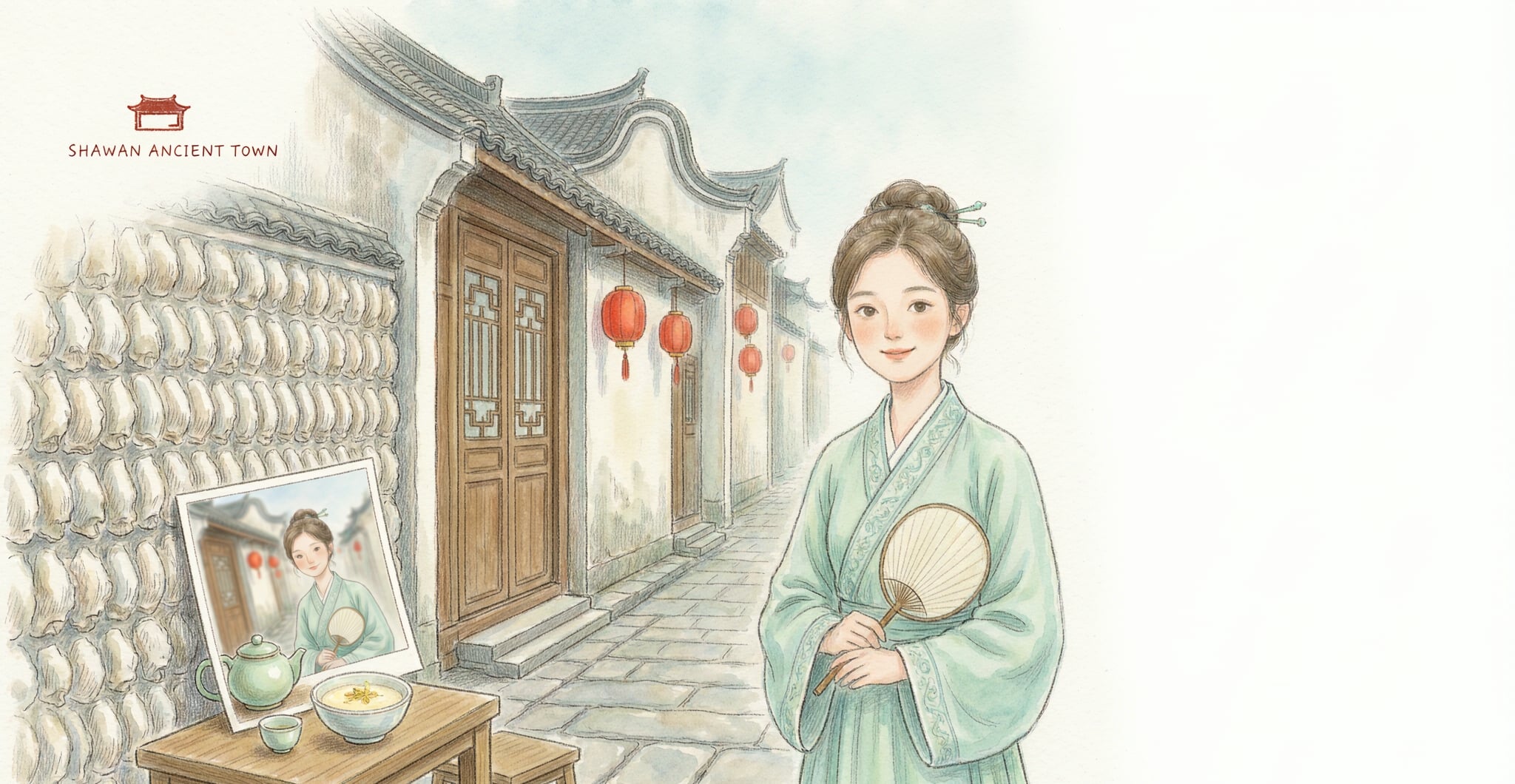
Field Dispatch: China Stay’s certified cultural advisor Lucy Liu on location in Shawan Ancient Town, Guangzhou. Dressed in traditional embroidered Hanfu along the stone-paved alleys of Panyu District, framed by 800-year-old Lingnan brickwork and heritage courtyard gates.
The Living Tradition: Zanhua Floral Headpieces & Lingnan Aesthetics
Beyond standard Ming and Song Dynasty robes, Shawan’s artisan ateliers specialize in Zanhua (簪花) — the elaborate heritage floral headpiece tradition named a National Intangible Cultural Heritage. Freshly arranged blossoms and delicate floral garlands are woven into high updos, creating a striking contrast against Shawan’s ancient oyster-shell walls and carved granite doorways.

Lingnan Styling Close-up: Lucy Liu showcasing a handcrafted Zanhua (簪花) floral headpiece and traditional jade hairpin arrangement inside a restored Shawan courtyard studio.
Hanfu Experience Pricing & Packages
[!NOTE] Pricing Guidance Shawan rental and styling packages reflect the advertised market range across independent studios in Panyu. Prices vary depending on hair complexity, makeup detailing, garment embroidery tier, and whether photo shooting/retouching is included. Always confirm terms and deliverables in person before booking.
| Package Tier | Estimated Price Range (CNY) | What Is Included | Recommended For |
|---|---|---|---|
| Basic Garment Rental | ¥98 – ¥168 | Garment rental for 3–4 hours, basic props (fan/parasol) | Self-photographers & casual strolls |
| Full Styling (Hair & Makeup) | ¥198 – ¥358 | Authentic Ming/Song Dynasty or Lingnan hair-updo, Zanhua flowers, makeup & full attire | Self-guided camera walk or friend shoot |
| Comprehensive Photo Package | ¥388 – ¥588+ | Full styling + 1 hour dedicated photographer + 10-15 color-graded digital photos | High-quality portraits in ancestral halls |
Practical Tips for Booking:
- In-Person Consultation: Walk through 2–3 shops near the town entrance to examine garment hygiene, hair accessories, and real client portfolios before committing.
- Deposit & Return Times: Most shops take a small deposit (or hold an ID/digital deposit via WeChat) and allow you to roam freely until 18:00–19:00.
- Best Lighting Hours: 08:30–10:30 (before weekend crowds gather) and 16:00–17:30 (when golden hour filters through the wok-ear pediments).
- Accompanied Cultural Strolls: If you would like a private bilingual guide to assist with atelier negotiation, styling translation, and high-speed rail routing from central Guangzhou, Lucy Liu is available for custom cultural day itineraries via China Stay Advisory.
Food & Sustenance: Authentic Shawan Delicacies
Shawan is a legendary culinary destination with specialties that differ significantly from central Guangzhou’s dim sum halls:
- Shawan Ginger Milk Curd (沙湾姜埋奶): The definitive hometown dessert. Fresh water buffalo milk (renowned for its high fat content and velvety density) is heated to approximately 75°C and poured briskly over freshly grated ginger root juice. Within two minutes, enzyme coagulation sets the milk into a silky custard that balance sweet creaminess with spicy warmth. Look for heritage shops like Qinyifang (沁芳园) or Shawan Milk Queen (沙湾奶牛皇后).
- Water Buffalo Double-Skin Milk (双皮奶): Steamed twice to create a delicately wrinkled milk skin on top, served warm or chilled.
- Panyu Fish Cakes & Fried Dace Dumplings (番禺鲮鱼饼): Savory pan-seared dace fish patties flavored with chopped spring onions, water chestnuts, and tangerine peel.
- Wok-Fried Sticky Rice with Preserved Meats (生炒糯米饭): Slow-cooked over clay braziers with local Cantonese cured sausage (lap cheong) and dried shiitake mushrooms.
Cost of Living for Slow Travelers & Nomads in Panyu
Panyu District provides a noticeably lower cost of living than downtown Tianhe, making it a compelling base for extended creative retreats or quiet remote work sprints (compare regional prices in our China Cost of Living Guide):
| Expense Category | Monthly Cost (CNY) | Monthly Cost (USD) | Practical Notes |
|---|---|---|---|
| Furnished Apartment / Guesthouse | ¥3,200 – ¥5,000 | $445 – $695 | Modern serviced 1-bedroom near Line 3 or courtyard stay (see Long-Term Housing) |
| Coworking & Work Cafes | ¥600 – ¥1,100 | $85 – $155 | Independent roasteries & creative spaces (see Best Coworking Spaces) |
| Daily Food & Market Groceries | ¥1,800 – ¥2,800 | $250 – $390 | Cantonese roast goose, dim sum, local wet markets |
| Coffee & Tea Rituals | ¥450 – ¥750 | $65 – $105 | Daily espresso or Gongfu tea tastings |
| Metro, High-Speed Rail & Taxis | ¥250 – ¥450 | $35 – $65 | Paid via Alipay/WeChat Pay; seamless Guangzhou South access |
| Total Estimated Budget | ¥6,300 – ¥10,100 | $880 – $1,410 | High-comfort slow travel & visitor lifestyle |
If renting a private guesthouse or studio in Panyu for an extended stay, remember to complete your mandatory 24-hour accommodation registration (PSB). Furthermore, Guangzhou serves as the medical hub of southern China: top tertiary hospitals offer bilingual consultations, physical checkups, and dental procedures at 75% savings compared to Western clinics. Read our specialized guide on Guangdong’s 25 Pilot International Hospitals for Foreigners or explore our Dental & Medical Tourism Portal.
Getting There & Digital Nomad Practicalities
Transit Route from Central Guangzhou
- Take Metro Line 3 south to Panyu Square Station (番禺广场站).
- From Exit D or C, take a direct taxi (15–20 minutes, ~¥20–¥28 via Didi inside Alipay) or board local bus Panyu 67 or Panyu 68 directly to Shawan Ancient Town South Gate.
- Guangzhou South Railway Station (广州南站) — China’s busiest high-speed rail hub — is only 25 minutes away by taxi, offering direct 30-minute bullet trains to Shenzhen, Hong Kong West Kowloon (50 mins), and Guilin (2.5 hours). Book departures easily via China Railway 12306.
- Airport Gateways: Arriving international visitors landing at Guangzhou Baiyun International Airport (CAN) qualify for China’s 240-Hour Visa-Free Transit (TWOV) across Guangdong and 23 other designated provinces. Check your route on our Transit Visa-Free Checker.
Connectivity & Working Spots
- Cellular & WiFi: Mobile 5G coverage (China Mobile and China Unicom) is strong throughout the town, averaging 180–300 Mbps download. Configure your connection tools before arriving (see VPN & Internet Survival Guide and Internet for Remote Workers).
- Work-Friendly Cafes: Several renovated brick courtyard cafes along the town perimeter provide fast broadband, air conditioning, and power outlets. Shawan Tea & Coffee Guild and Old Kiln Cafe provide tranquil garden desks suitable for multi-hour focus sessions.
Frequently Asked Questions
Is there an admission fee to enter Shawan Ancient Town?
Strolling through the streets and lanes of Shawan Ancient Town is completely free of charge. Only a few designated ancestral museum halls (such as Liugeng Hall and Sanren Hall) require an optional combined preservation ticket (approximately ¥30–¥40 CNY).
How long should I budget for a slow-travel visit?
For a day trip, plan 4 to 6 hours to wander the alleys, experience a hanfu photography session, and sample local buffalo milk desserts. For writers, artists, or slow travelers, renting a courtyard guesthouse for 1 to 2 weeks provides a peaceful creative sanctuary with rapid metro access to downtown Guangzhou.
Do shop owners in Shawan speak English?
Basic English is limited in Shawan compared to central Tianhe. However, standard Mandarin and Cantonese are universally spoken, and vendors routinely use WeChat and Alipay translation or point-and-pay without issue. Having translation apps installed makes every interaction smooth.
Curator of China Nomad Guide. Specializing in bespoke route architecture, bilingual on-the-ground fixer services, and neutral medical/dental tourism logistics. Based between Chengdu, Yunnan, and Shanghai.
Get the China Stay China Arrival Kit & Checklist
Don’t get locked out without connectivity or payment at the border. Instant access to our interactive 12-step field guide + offline 1-page PDF printable cheat sheet covering pre-flight eSIMs, foreign card Alipay binding, PSB police registration, and railway ticketing.
Curated by Villanelle (IG: @v.forvillanelle • hello@chinastay.org). Zero spam.