Operational Snapshot • Verified November 11, 2026
Covers APEC Leaders’ Week in Shenzhen (November 14–20, 2026)—including ABAC/CSOM (November 14–16), the CEO Summit (November 17–18), and the 33rd Economic Leaders’ Meeting (November 18–19)—alongside municipal transit measures (November 16–20), the New Huanggang co-location port (opened October 12, 2026), and November 1, 2026 ABTC 90-day stay rules.
When multilateral diplomacy lands in Shenzhen, the city’s usual commercial tempo splits in two. Out in Nanshan and Bao’an, software offices and toolmakers keep normal hours. Around northern Xiangmihu in Futian District, however, road geometry tightens into something closer to a European capital hosting a G7. For executives crossing from Hong Kong or landing at Bao’an during summit week—or returning later in the year on routine Greater Bay Area itineraries—schedules hold only if you abandon curbside taxis near the venue perimeter and match your passport to the right crossing.
1. The Xiangmihu Perimeter and Futian Movement
The main summit complex sits at the Shenzhen International Exchange Centre (No. 3006 Xiangmihu Road / 香蜜湖路3006号), on the northeastern corner of Xiangmihu Road and Hongli West Road in Futian District—not to be confused with the older Shenzhen Convention and Exhibition Center further south in central Futian CBD. Rather than closing districts wholesale, local authorities rely on phased, rolling lane holds, temporary one-way switches, and brief tunnel pauses along arterial corridors linking official delegation hotels to the venue.
During the core November 16–20 municipal work framework, roughly 90% of official public-sector vehicles have been pulled off local roads alongside city-wide campaigns urging private motorists to commute by rail. For visitors, the practical consequence is that hailing a DiDi or flagging a taxi inside Futian becomes erratic: drivers are routinely deflected onto side-street detours outside hotel driveways or held short of cordoned intersections before navigation apps update.
Shenzhen’s underground network stays insulated from surface motorcades. Across the November 16–20 window, Shenzhen halved Metro and public bus fares while compressing intervals on core lines to roughly two minutes. Rather than relying on surface drop-offs near Xiangmihu Road, walk in from surrounding stations:
- Xiangmi Station (香蜜, Metro Line 2 / Line 8): The closest north-side approach, roughly a 10-to-15-minute walk (~1 km) to the Xiangmihu Road complex before encountering outer delegate security cordons.
- Xiangmei Station (香梅, Metro Line 9): Roughly a 12-to-15-minute walk (for instance via Exit D), practical when approaching from Futian hotel clusters along Hongli West Road or Jingtian.
- Nonglin Station (农林, Line 7) & Chegongmiao Station (车公庙, Lines 1 / 7 / 9 / 11): About 15 minutes on foot from Nonglin or 15–18 minutes (~1–1.2 km) from Chegongmiao, making Chegongmiao a useful interchange if arriving straight from Bao’an Airport on Line 11.
Note that nearby metro stations remain open for regular commuters, though open exits do not guarantee pedestrian access into credentialed venue zones. Even outside summit weeks, weekday evening transfers across Futian between 17:30 and 19:30 consistently clear faster by Metro than by car.
2. Four Cross-Border Corridors Between Hong Kong and Shenzhen
Choosing a crossing depends on what hour you clear customs and whether your meetings cluster in Futian’s financial core or westward toward Nanshan. Treat Hong Kong West Kowloon High-Speed Rail as your daytime default, and keep Huanggang in reserve whenever dinners or inbound long-haul flights push late into the evening.
| Corridor | Transit Window | Fare / Access Mechanics | Hard Operational Trap | Best Use Case |
|---|---|---|---|---|
| HK West Kowloon → Futian Station (HSR) | 14–15 min rail run (arrive 60–90 min pre-departure per MTR guidance) | Co-location immigration cleared inside West Kowloon before boarding; Second Class ¥68 RMB (HK$79) | Level B1 ticket/ID check closes strictly 30 min prior; Level B3 gates shut 5 min prior | Daytime executive meetings in Futian CBD & Xiangmihu |
| New Huanggang Port (皇岗口岸) | Continuous 24/7 border clearance | Opened Oct 12, 2026; “One-Stop” single-queue joint inspection (~5 min average) + direct Metro Line 7 (B2) | Surface taxis exiting the terminal can still hit Futian road holds—switch straight downstairs to Line 7 | Late-night returns after 22:30 or early-morning departures |
| Shenzhen Bay Port (深圳湾口岸) | 06:30 – 00:00 daily (passenger & private cars) | Co-location vehicle & passenger hall with direct cross-border MPV lanes | Strictly closes at midnight on standard days; unsuitable for late arrivals | Direct private car transfers into Nanshan, Shekou, or Bao’an |
| HKIA SkyPier ↔ Shekou Cruise Homeport | 30–40 min ferry crossing | Sealed sea-to-air / air-to-sea transit bypassing Hong Kong city immigration | Bag drop closes 60 min before sailing; no entry into downtown Hong Kong | Same-day international flight connections out of HKIA |
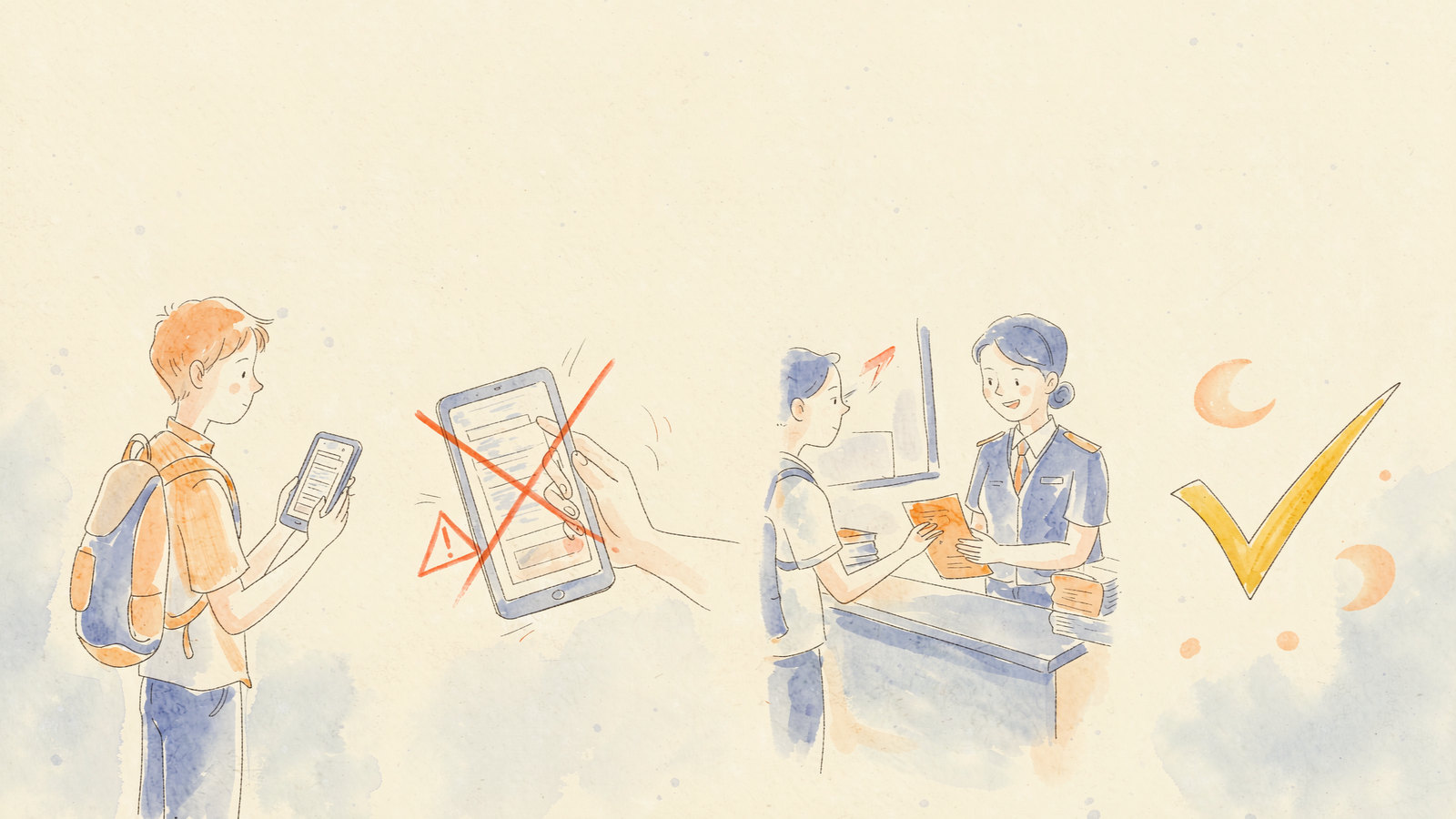
For foreign passport holders using the West Kowloon to Futian bullet train, MTR officially recommends arriving up to 90 minutes before departure (45–60 minutes can suffice off-peak with automated e-channels, whereas manual passport inspection queues swell noticeably before morning and Friday evening departures). Note that Level B1 real-name verification cuts off 30 minutes before departure and Level B3 boarding gates close 5 minutes prior—read our breakdown of 12306 rail booking rules for foreign passports before your assistant books tickets. Bear in mind also that Futian Port (福田口岸 / Lok Ma Chau MTR) operates fixed 06:30 to 22:30 hours; once a dinner in Central runs late, route directly to Huanggang rather than Lok Ma Chau, taking advantage of Huanggang’s B2 connection to Shenzhen Metro Line 7 if surface roads are cordoned.
If you land directly at Shenzhen Bao’an International Airport (SZX) rather than Hong Kong International, walk roughly three minutes from Terminal 3 into the Ground Transportation Center and head down to the underground Metro Line 11 station (Level -1 / B1–B3). Express trains reach Futian Station directly in 30 to 35 minutes without transfers; two Business Class carriages (Cars 7 and 8) at the end of each 8-car train—meaning either front or rear depending on travel direction—cost triple standard fare (roughly ¥21 vs. ¥7 to Futian) via platform upgrade validators and offer 2+2 seating with luggage space.
3. The November 1, 2026 ABTC Rule—and the North American Trap
Effective November 1, 2026, China officially extended the maximum stay per entry for eligible APEC Business Travel Card (ABTC) holders from 60 days to 90 days, alongside matching updates from Hong Kong, Singapore, Indonesia, and the Philippines. Both physical cards bearing CHN on the reverse and the official Virtual ABTC mobile credential are accepted at Chinese ports of entry, with dedicated APEC lanes operating at Bao’an Airport (SZX), Shenzhen Bay, and Huanggang.
One critical legal distinction trips up North American executives every summit season:
The US & Canadian ABTC Transitional Trap (Plus Canada’s Separate Exemption)
Both the United States and Canada participate in the ABTC scheme strictly as transitional members—meaning neither country’s ABTC carries aCHNpre-clearance code or grants ABTC-based visa-free entry into mainland China (though holders may use marked fast-track lanes at participating airports).
Crucially, Canada (alongside the United Kingdom) holds a separate 30-day unilateral visa-free waiver effective February 17, 2026 through December 31, 2026, allowing ordinary Canadian and UK passports to enter round-trip without a visa. United States passport holders do not hold that unilateral waiver.
If you travel on a US passport without an existing multi-year M or L consular visa, your visa-free option remains China’s 240-Hour (10-Day) Transit Without Visa (TWOV) framework: a strict Country/Region A -> Mainland China -> Country/Region C transit where Hong Kong and Macau legally qualify as Region C. Flying San Francisco → Shenzhen → San Francisco—or entering via Hong Kong and immediately exiting back to Hong Kong via the Shekou ferry without onward third-region routing (US -> HK -> Shenzhen -> HK)—is treated as a closed-loop round trip and triggers denied boarding. Before booking multi-leg Greater Bay Area flights or Shekou ferries on a TWOV itinerary, verify your exact routing in our Interactive Transit Visa-Free Checker, submit the free NIA Digital Arrival Card, and check the China 240-Hour Transit & Visa-Free Field Guide.
4. Device Hygiene, 3C Power Banks, and Cashless Basics
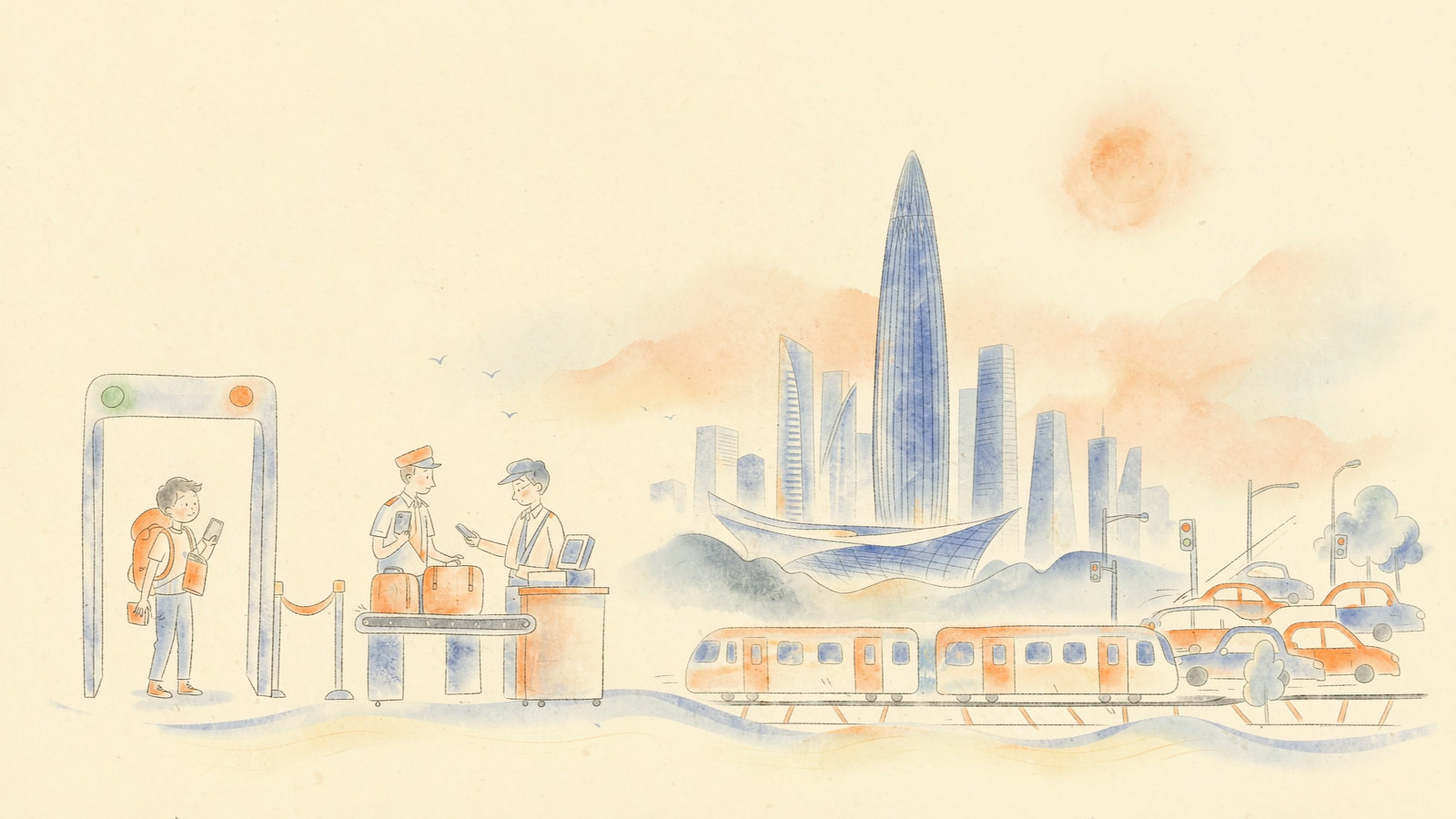
High-profile summit traffic brings tighter bag inspection not only around conference gates, but across metro turnstiles and domestic airport concourses.
- Domestic Flight
3CPower Bank Enforcement: While inbound international arrivals follow standard 100 Wh carry-on aviation rules, security checkpoints for all domestic mainland flights out of Shenzhen Bao’an (including connecting domestic legs to Shanghai or Beijing) strictly enforce visible China Compulsory Certification (3C/CCC) markings. Portable chargers bought in North America or Europe—even familiar Anker or Apple MagSafe packs—typically lack printed3Cstamps and are routinely confiscated at domestic trays. Review our full China 3C Power Bank Flight Rules & Rail Guide for exact 100 Wh limits and 12306 rail alternatives, or keep batteries strictly in carry-on and buy a3Cbackup in Futian. - Unfiltered Connectivity: Corporate VPN clients over hotel Wi-Fi frequently throttle or stall under heightened network inspection during summit weeks. Activate an international roaming travel eSIM with non-mainland breakout routing prior to leaving West Kowloon or landing at Bao’an so corporate mail, calendar invites, and Signal remain live without tunneling overhead.
- Merchant Payments & Retail Tax Refunds: Taxis, transit validators, and storefronts operate overwhelmingly through Alipay and WeChat Pay. Link an international Visa or Mastercard before departure via our Foreigner Mobile Payment Setup Guide and retain crisp RMB notes strictly as backup. If purchasing electronics or luxury goods in Shenzhen over ¥200 RMB, note our China Departure VAT Tax Refund Guide—departures carrying tax-refund goods into Hong Kong require using Shenzhen’s designated refund ports (Bao’an T3, Shekou, Futian Port, Shenzhen Bay, or Wenjindu) rather than West Kowloon HSR.
5. Splitting Your Itinerary: Futian vs. Nanshan & Huaqiangbei
Once summit security controls lift after November 20, Shenzhen’s geography sorts cleanly by commercial objective:
- Futian (福田): Best reserved for cross-border finance, Hong Kong investor schedules, and rapid bullet-train commutes from West Kowloon.
- Nanshan (南山): Anchors enterprise AI and R&D labs around Shenzhen Bay and Kexing Science Park; more efficiently reached via Shenzhen Bay Port or Line 11 than eastern crossings.
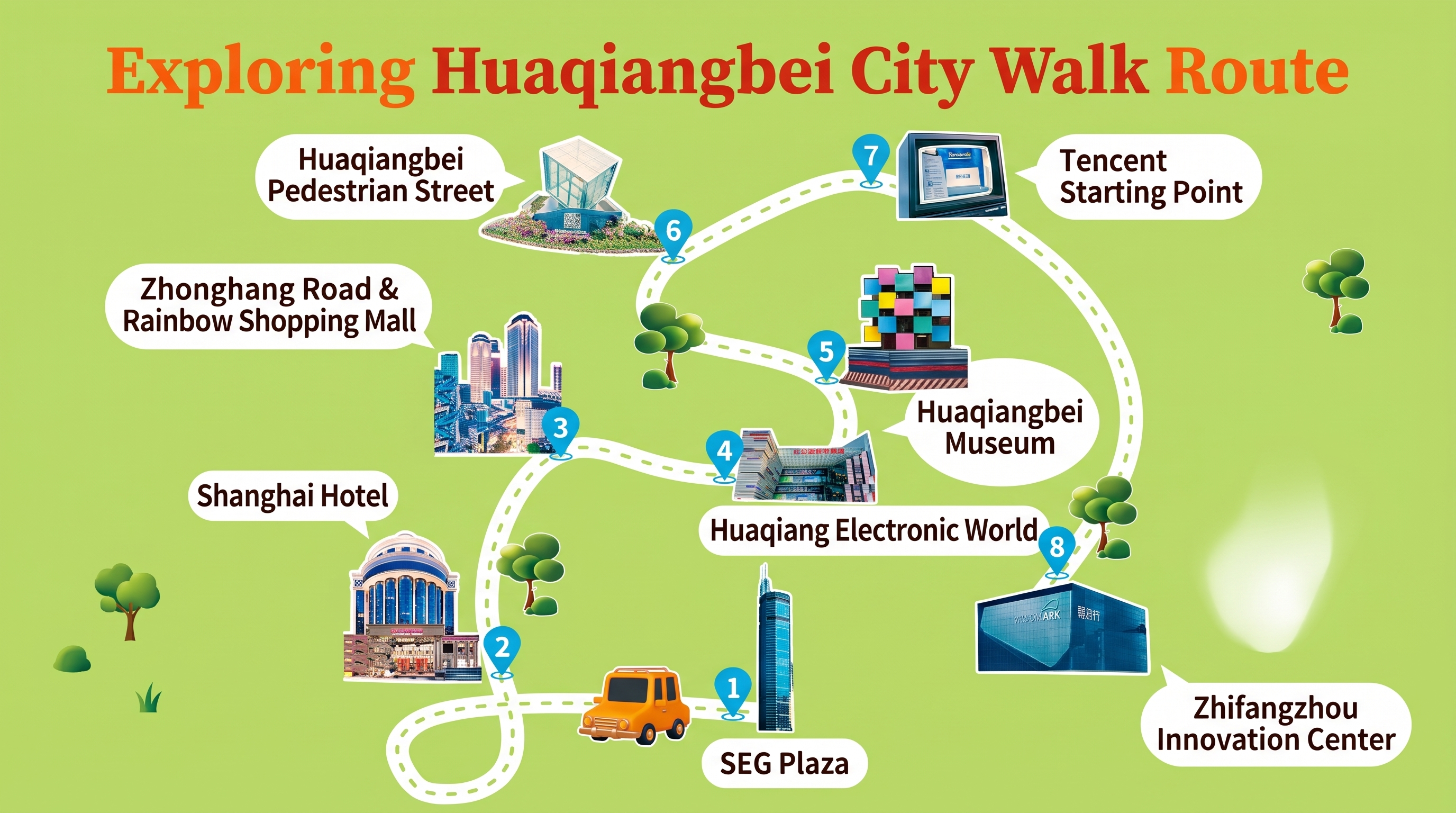
- Huaqiangbei (华强北) & Bao’an: Dedicated to component sourcing, rapid PCB fabrication, and factory audits—covered separately in The Hardware Nomad’s Guide to Shenzhen.
For teams needing bilingual technical accompaniment on Bao’an factory floors or scheduled executive logistics across Futian and Dongguan, connect directly through our Shenzhen Bilingual Fixer & Interpreter Directory or book a pre-flight itinerary review via our Consultation Services page.
Frequently Asked Questions
How does APEC 2026 in Shenzhen affect travel between Hong Kong and Futian?
APEC Leaders’ Week spans November 14–20, 2026 around the Shenzhen International Exchange Centre at No. 3006 Xiangmihu Road, Futian (near Hongli West Road). Rolling road holds and reduced public-sector/private traffic between November 16 and 20 make DiDi and curbside taxis unreliable inside Futian. Hong Kong West Kowloon to Futian high-speed rail (14–15 minutes) and Shenzhen Metro—especially Xiangmi (Line 2 / Line 8), Xiangmei (Line 9), and Chegongmiao—remain consistent; follow MTR guidance and allow 60–90 minutes pre-departure at West Kowloon for Level B1 ticket check (closes 30 minutes prior) and co-location customs.
Can an APEC Business Travel Card (ABTC) holder stay 90 days in China?
Yes. Effective November 1, 2026, China extended maximum entry stays for eligible ABTC holders from 60 days to 90 days per visit, covering both physical CHN-endorsed cards and Virtual ABTCs. Note that US and Canadian ABTCs remain transitional cards without CHN visa exemption: Canadian citizens currently rely on China’s separate 30-day unilateral visa waiver (valid through December 31, 2026), while US citizens require a visa or qualifying 240-hour transit itinerary.
Which Shenzhen–Hong Kong border crossing is open 24 hours?
The redeveloped New Huanggang Port—which opened on October 12, 2026 with “One-Stop” single-queue joint inspection and direct access to Shenzhen Metro Line 7 (B2)—operates 24/7 for passengers and vehicles. Futian Port (Lok Ma Chau MTR) operates 06:30–22:30, and Shenzhen Bay Port runs 06:30–00:00 on standard days.
Will my foreign power bank pass security at Shenzhen Bao’an Airport?
On international departures, standard carry-on limits apply (under 100 Wh without special airline approval, never in checked baggage). On domestic mainland flights departing Shenzhen Bao’an, CAAC security strictly enforces visible 3C (CCC) certification markings and routinely confiscates uncertified foreign-market portable chargers.
Curator of China Nomad Guide. Specializing in bespoke route architecture, bilingual on-the-ground fixer services, and neutral medical/dental tourism logistics. Based between Chengdu, Yunnan, and Shanghai.
Get the China Stay China Arrival Kit & Checklist
Don’t get locked out without connectivity or payment at the border. Instant access to our interactive 12-step field guide + offline 1-page PDF printable cheat sheet covering pre-flight eSIMs, foreign card Alipay binding, PSB police registration, and railway ticketing.
Curated by Villanelle (IG: @v.forvillanelle • hello@chinastay.org). Zero spam.