[!CAUTION] OFFICIAL MEDICAL & LEGAL DISCLAIMER China Stay provides logistics, bilingual interpretation, hospital guiding, and educational information only. We do not provide medical advice, diagnosis, triage, or clinical treatment recommendations, and we never sell, broker, or mail prescription pharmaceuticals. Every treatment decision must be made in consultation with your personal licensed oncologist, and every cross-border importation question must comply with relevant national customs and food & drug authorities.
Key Takeaways (TL;DR)
- The “Approval Gap” Is Real: Groundbreaking innovative oncology treatments increasingly receive regulatory approval in China 12 to 36 months before they become commercially available in the United States or Western Europe.
- The Sunvozertinib Precedent: For EGFR exon 20 insertion non-small cell lung cancer (NSCLC), the targeted inhibitor Sunvozertinib (舒沃哲 / Shūwòzhé) was approved by China’s NMPA on August 22, 2023. Although the US FDA granted accelerated approval on July 2, 2025, commercial distribution in the US was delayed until late 2026. As documented in detail by KFF Health News and The Washington Post, at least 30 American families have traveled to China to access the medication.
- Strictly Prescription-Only: You cannot walk into a retail pharmacy and buy targeted oncology medications off the shelf. Foreign patients must be evaluated in-person by a licensed Chinese physician at a hospital’s International Medical Department (国际医疗部), who issues an official clinical prescription.
- Legal Framework for Returning Home: Under the US FDA’s Personal Importation Policy (Enforcement Discretion), patients may generally bring home up to a 3-month supply for a serious condition if no effective domestic alternative exists, accompanied by a letter from a US-licensed supervising doctor.
- Border Logistics: US, UK, and European citizens can enter China visa-free for up to 10 days using the 240-Hour Visa-Free Transit (TWOV) regime, provided they hold a confirmed onward ticket to a third country or territory (e.g., US $\to$ Shanghai $\to$ Hong Kong/Japan $\to$ US).
1. The Story Behind This Field Dispatch
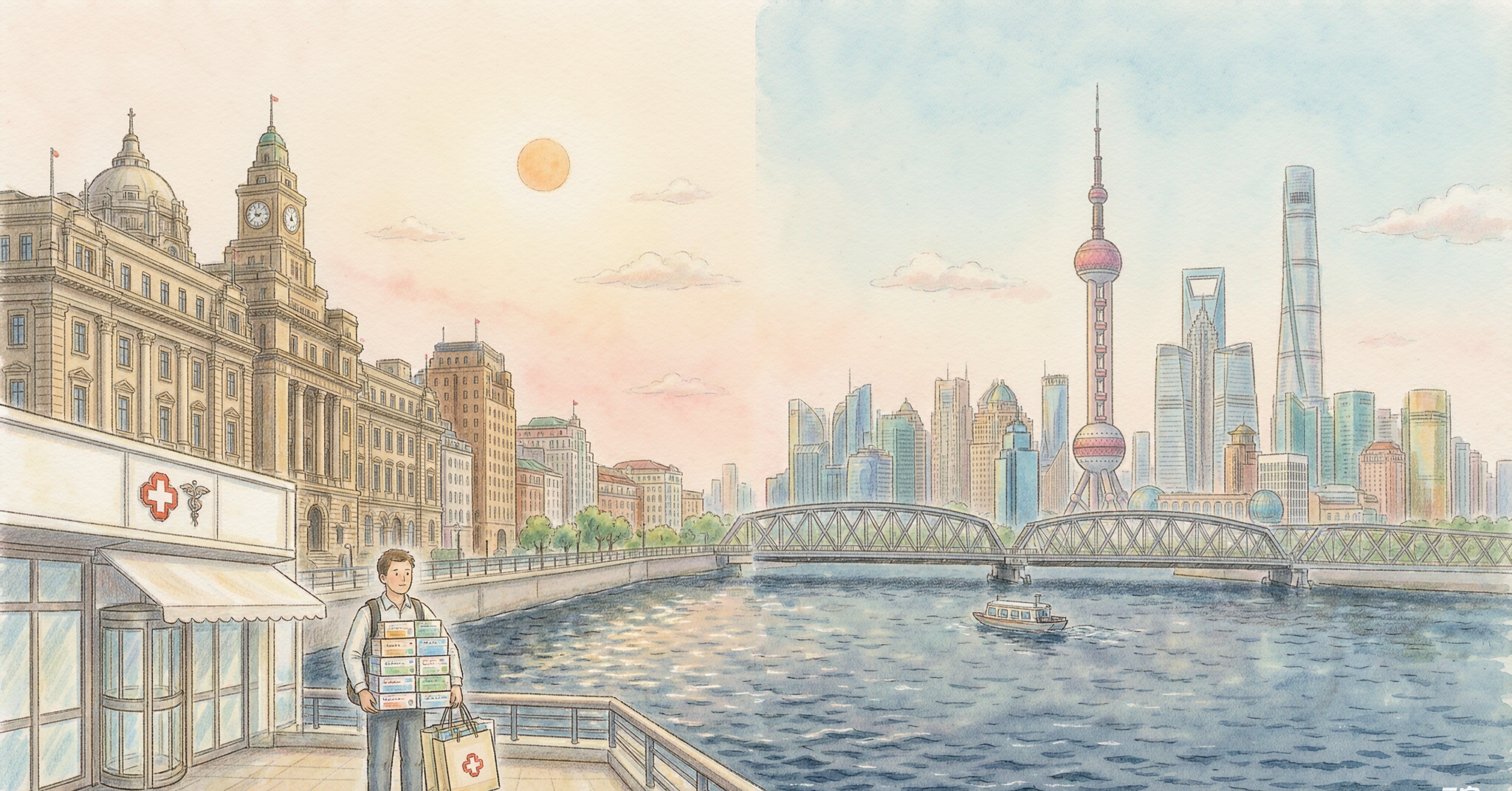
In January 2025, Debbie Doppelt’s stage-4 lung cancer spread to her brain. Her son, Max Doppelt, shared their journey publicly on X:
The drug with the best chance of helping her was approved in China but not here. A doctor told me, almost as an aside, that if she were Chinese she could buy it at a pharmacy. So I flew to Shanghai and came home with 26 boxes in my luggage.
View original post on X (Twitter) →
October 2026
According to an investigative report by KFF Health News (syndicated by The Washington Post), the medication was Sunvozertinib, developed by Shanghai-based Dizal Pharmaceutical. Debbie had already exhausted conventional platinum-based chemotherapy and surgical interventions, and was ineligible for relevant US clinical trials due to mild lung scarring.
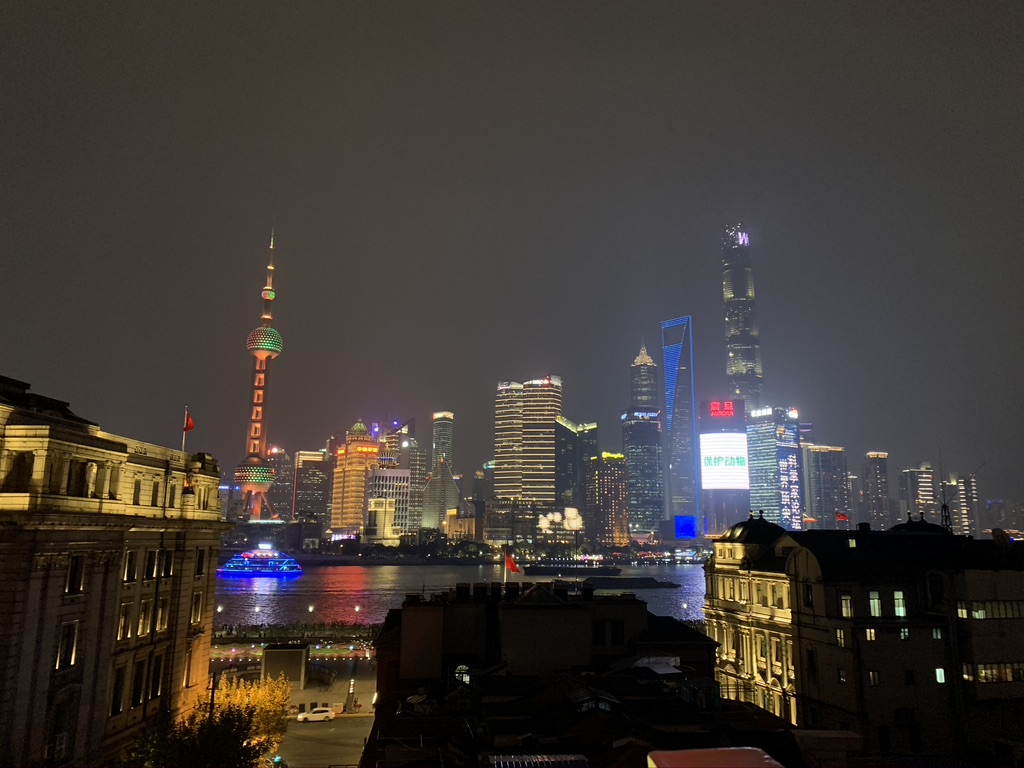 Shanghai’s Bund and Huangpu River skyline at night.
- In the US late-stage trial, half of the enrolled participants were randomized to repeat chemotherapy—an unacceptable gamble for a patient whose tumor had already outsmarted chemo.
- Max traveled to Shanghai, consulted an oncologist, and purchased a supply for approximately $10,000 USD.
- Nineteen months after beginning treatment, Debbie’s cancer was reported to be largely kept at bay with supplementary localized radiation.
Note on clinical reality: Sunvozertinib does not work for every patient. In the pivotal trial submitted to the FDA, the overall objective response rate was 46%. As Max noted, roughly half the families who have made the journey saw meaningful tumor shrinkage, while others experienced disease progression within months.
We publish this guide not to urge anyone to travel, but because families facing terminal diagnoses are already booking flights to Shanghai and Beijing—often navigating foreign hospital wards, medical visas, and customs regulations with zero reliable English logistics.
2. Why Innovative Drugs Reach China First: Sourced Timeline
Historically, the Western world assumed novel pharmaceutical breakthroughs always debuted in Boston, Basel, or San Francisco. Over the past five years, China’s National Medical Products Administration (NMPA) accelerated its regulatory pipelines, while Chinese biotech firms began originating first-in-class small molecules.
| Milestone | Date | Regulatory / Corporate Source |
|---|---|---|
| China NMPA Approval | August 22, 2023 | NMPA approves Sunvozertinib (舒沃哲) for adult patients with locally advanced or metastatic EGFR exon20ins NSCLC. |
| China NRDL Inclusion | Effective Jan 1, 2025 | Added to China’s National Reimbursement Drug List; official prices reduced by >50%. |
| US FDA Accelerated Approval | July 2, 2025 | FDA grants accelerated approval (branded as Zegfrovy). |
| Global Commercial Licensing | July 14, 2026 | Dizal Pharmaceutical licenses exclusive global rights (ex-China) to AstraZeneca for $600M upfront + $900M in milestones. |
| US Market Reality | October 2026 | KFF Health News investigative reporting verifies the drug has still not reached US pharmacy shelves, awaiting formal Q4 commercial rollout. |
The Gap in Numbers: 22 months passed between China’s regulatory clearance and US FDA approval. More than 3 years elapsed between Chinese patients receiving the therapy and its physical availability in American cancer clinics.
3. The Three Legal Rulebooks You Must Satisfy
Before undertaking any cross-border medical journey, patients and caregivers must satisfy three distinct legal jurisdictions:
┌─────────────────────────┐     ┌─────────────────────────┐     ┌─────────────────────────┐
│     1. INSIDE CHINA     │     │     2. LEAVING CHINA    │     │   3. ARRIVING HOME (US) │
│ • Valid passport entry  │     │ • "Personal use,        │     │ • FDA Personal Import   │
│ • Tier-3 Guoji Bu appt  │ ──► │    reasonable quantity" │ ──► │ • Under 3-month supply  │
│ • Physical consultation │     │ • Official fapiao &     │     │ • Written US MD letter  │
│ • Licensed prescription │     │   bilingual records     │     │ • Declare at CBP border │
└─────────────────────────┘     └─────────────────────────┘     └─────────────────────────┘
3.1 Inside China: Lawful Prescription & Dispensing
- Non-OTC Status: China strictly categorizes pharmaceutical drugs as either Over-The-Counter (OTC) or Prescription (处方药). Innovative cancer therapies are strictly non-OTC.
- Hospital Guoji Bu (国际医疗部): Foreign passport holders can legally register at the International Medical Departments of premier Grade-A Tier-3 public teaching hospitals (such as Fudan University Shanghai Cancer Center 复旦大学附属肿瘤医院 or Peking Union Medical College Hospital 北京协和医院).
- Out-of-Pocket Payment: International visitors are not covered by China’s basic national health insurance (yǐbǎo 医保) and must pay the self-pay retail price. Ensure you obtain an official tax invoice (发票 - Fāpiào) stamped with the hospital’s clinical seal.
3.2 Leaving China: Customs Export Regulations
China’s General Administration of Customs (GACC) enforces a strict “Personal Use, Reasonable Quantity” (自用、合理数量) principle for pharmaceuticals carried out of the country.
- The quantity must correspond rationally to the patient’s documented medical condition and prescribed dosage.
- Always keep medications in their original, sealed manufacturer boxes.
- Keep your printed physical doctor’s prescription, diagnostic summary, and invoice with you in your carry-on bag.
- Never engage in “Daigou” (代购): Purchasing medicine on behalf of third parties or reselling drugs is a severe criminal offense under Chinese law.
3.3 Returning to Your Home Country (US FDA Personal Importation)
Under the FDA Personal Importation Policy (Regulatory Procedures Manual Section 9-2), FDA and CBP inspectors may exercise enforcement discretion to permit the importation of unapproved or domestically unavailable foreign medications when ALL of the following criteria are met:
- Serious Condition: The drug is intended to treat a serious medical condition for which no effective domestic treatment is commercially available.
- No Domestic Commercialization: The product is not being promoted or commercialized to US residents.
- No Unreasonable Risk: The drug is considered safe under verified medical guidance.
- Written Affirmation: The patient affirms in writing that the drug is solely for their personal medical treatment.
- Quantity Limit: The supply generally does not exceed 90 days (3 months).
- Supervising US Physician: The patient provides the name, address, and license number of the US-licensed oncologist responsible for supervising their care, along with proof that treatment commenced under medical supervision.
[!WARNING] Once a medication achieves widespread commercial availability in the US market, the FDA’s justification of “no effective domestic alternative available” generally expires. Always verify current domestic supply status before scheduling international travel.
4. Step-by-Step Caregiver & Patient Playbook
Step 1: Secure Your Home Oncologist’s Buy-In (Week 0)
Do not book flights until you have had an open, documented conversation with your primary oncologist:
- “Given my genetic sequencing (e.g. EGFR exon20ins), is this medication clinically appropriate?”
- “Are there domestic clinical trials or expanded access compassionate-use programs open to me?”
- “Will you supervise my laboratory blood work and side-effect monitoring upon my return?”
- “Will you provide a signed letter on clinic letterhead detailing my diagnosis for US Customs?”
Step 2: Translate & Assemble the Medical Dossier (Week 1)
Chinese hospital oncologists require objective diagnostic documentation before prescribing targeted agents:
- Comprehensive Next-Generation Sequencing (NGS) Genetic Report (confirming exact exon insertion/mutation).
- Pathology Biopsy Reports (original histological confirmation).
- Recent CT/MRI/PET Scans (both written radiology reports and DICOM imaging files on USB/disc).
- Summary of Prior Therapies (chemotherapy cycles, radiation, immunotherapies, and adverse reactions).
- Tip: Have all medical records compiled into a concise 2-page bilingual English-Chinese clinical abstract.
Step 3: Route Your Travel (Week 1–2)
- The 240-Hour Visa-Free Transit Hack: Citizens of the US, UK, Canada, Australia, and 50 other nations can enter China for up to 10 days (240 hours) without a Chinese visa, provided they arrive from Country A (e.g., USA) and hold a confirmed onward ticket to Country C (e.g., Hong Kong, Tokyo, Seoul).
- Valid Routing Example: Los Angeles $\to$ Shanghai Pudong (5 days) $\to$ Hong Kong (2 days) $\to$ Los Angeles.
- Invalid Routing (Rejected): Los Angeles $\to$ Shanghai $\to$ Los Angeles (Direct round-trips do not qualify for TWOV).
- Use our Interactive Transit Visa-Free Checker to verify your flights.
- Direct 30-Day Visa-Free: Passport holders from many European nations (Germany, France, Italy, Spain, Switzerland, etc.) and Singapore can enter China for up to 30 days unilaterally without any transit requirements.
Step 4: Schedule the International Medical Department (Week 2–3)
Do not show up in the crowded public outpatient triage hall. Contact the hospital’s dedicated Guoji Bu (国际医疗部):
- Shanghai: Fudan University Shanghai Cancer Center (复旦大学附属肿瘤医院 - 国际医疗部); Ruijin Hospital International Medical Center; Jiahui International Hospital.
- Beijing: Peking Union Medical College Hospital (PUMCH); Cancer Hospital Chinese Academy of Medical Sciences.
- Request an advance outpatient appointment with a senior chief physician (Zhǔrèn Yīshī 主任医师) in thoracic oncology.
Step 5: On-the-Ground Hospital Navigation (Days 1–3)
- Hospital Registration: Present original physical passports at the International Department admissions counter.
- Clinical Consultation: The oncologist reviews the tumor sequencing, discusses dosing protocols (note: Chinese packaging may specify different initial dosing schedules than Western trial protocols—always follow your oncologist’s guidance), and enters the electronic prescription.
- Pharmacy Settlement: Pay at the dedicated cashier. Major international wings accept foreign Visa/Mastercard credit cards, Alipay, and WeChat Pay. Obtain the formal Fapiao (发票) and stamped prescription copy.
- Discharge Documentation: Request a formal English Medical Certificate / Clinical Summary detailing:
- Patient Full Legal Name & Passport Number
- Clinical Diagnosis & Histological Staging
- Prescribed Medication Generic Name, Strength, Daily Dosage & Quantity Dispensed
- Prescribing Physician’s Printed Name, Hospital Stamp & Date
5. Printable Document Checklist
Print this checklist and place it in your travel document folder before boarding:
[ ] PRE-DEPARTURE CHECKLIST
    [ ] Valid Passport (6+ months remaining validity, 2+ blank pages)
    [ ] Confirmed onward international flight ticket (if utilizing 240-Hour TWOV)
    [ ] Home Oncologist’s signed diagnostic letter & license credentials
    [ ] Complete NGS genetic mutation sequencing report
    [ ] Histopathology biopsy reports & recent radiological imaging summaries
    [ ] International Medical Department appointment confirmation
    [ ] Roaming eSIM installed & foreign cards linked in Alipay / WeChat Pay

[ ] DEPARTURE FROM CHINA CHECKLIST
    [ ] Official printed Chinese Hospital Prescription
    [ ] Official stamped Tax Invoice (发票 Fāpiào)
    [ ] Hospital Bilingual Clinical Summary (Diagnosis, Drug, Dosage, Quantity)
    [ ] Medications kept in original, sealed manufacturer boxes in carry-on bag
    [ ] Signed FDA Personal Importation Statement (for US Customs declaration)
6. Financial Costs & Budgeting Reality
| Expense Category | Typical Range (USD) | Notes |
|---|---|---|
| Medication (Sunvozertinib) | ~$350–$450 per box | Standard dosing typically requires 2 to 4 boxes per month depending on milligram formulation. |
| International Wing Consultation | $100–$250 | Includes bilingual intake and senior thoracic oncologist review. |
| Bilingual Guiding & Escort | $299–$499 | Dedicated on-ground interpreter for hospital registration, triage, and pharmacy liaison. |
| Flights & 240-Hour Transit Routing | $900–$1,800 | Dependent on origin and onward transit hub (e.g., via HK or Tokyo). |
| Hotel in Central Shanghai (3 Nights) | $300–$600 | 4-star / 5-star international standard hotel near hospital districts. |
7. Critical Red Flags & Pitfalls to Avoid
- Beware of Social Media “Daigou” Shippers: Any entity on Telegram, WhatsApp, or WeChat claiming they can “mail prescription cancer drugs directly to your doorstep in America” is operating outside the law. Counterfeit risks, temperature-chain degradation, and customs seizure rates for unverified mail parcels are extraordinarily high.
- Never Check Medication in Cargo Luggage: Always carry all medications, original boxes, and supporting clinical paperwork in your personal carry-on backpack. Airplane cargo holds experience extreme sub-zero temperatures that can denature active pharmaceutical ingredients.
- Do Not Travel Alone If Frail: Navigating high-speed transit hubs and hospital corridors requires walking stamina. If the patient is fatigued from prior chemo cycles, travel with an able-bodied caregiver or book dedicated on-ground airport and hospital escort services.
Frequently Asked Questions (FAQ)
Can foreigners legally see doctors in China on a tourist or transit visa?
Yes. Foreign visitors on any valid legal entry status (including unilateral 30-day visa-free entries and 240-hour TWOV transit permits) can legally register for outpatient medical consultations, diagnostic imaging, and pharmacy services at Chinese Grade-A hospitals.
Can a hospital refuse to prescribe the drug to a foreign visitor?
Yes. Under Chinese medical regulations, a physician cannot blindly write a prescription simply because a patient demands it. The physician must verify that your clinical records, pathology, and genetic mutation profiles align with the medication’s approved clinical indications in China.
What happens when the drug becomes available at US pharmacies?
Once the medication completes domestic commercial rollout and distribution in your home country (as AstraZeneca plans for Zegfrovy in the US), the justification for overseas travel naturally diminishes, and domestic oncologists will transition patients to domestic specialty pharmacies.
How does China Stay assist international patients?
China Stay operates as an independent logistics, bilingual translation, and on-ground cultural advisory service. We do not provide clinical guidance or broker pharmaceuticals. We assist families by reviewing transit visa routes, coordinating hospital international department appointments, providing bilingual on-site hospital interpreters, and ensuring all bilingual discharge paperwork and invoices comply with border customs requirements.
Curator of China Nomad Guide. Specializing in bespoke route architecture, bilingual on-the-ground fixer services, and neutral medical/dental tourism logistics. Based between Chengdu, Yunnan, and Shanghai.
Get the China Stay China Arrival Kit & Checklist
Don’t get locked out without connectivity or payment at the border. Instant access to our interactive 12-step field guide + offline 1-page PDF printable cheat sheet covering pre-flight eSIMs, foreign card Alipay binding, PSB police registration, and railway ticketing.
Curated by Villanelle (IG: @v.forvillanelle • hello@chinastay.org). Zero spam.